F1's 2026 cars drew their warmest reviews in weeks at Budapest, one of the slowest tracks they visit. That cuts both ways..
By Monday morning the RaceFans rate-the-race poll had 78 votes in and the Hungarian Grand Prix sitting where almost nothing has sat for the enthusiast base this year, clustered at eight out of ten on 28 percent of votes and seven on 26 percent. That is a clear step up from the lukewarm verdict Spa drew a week earlier. The surprise is not the score. It is who gave it.
For most of the summer the loudest part of the fanbase has been arguing that 2026's racing is manufactured. RaceFans has run a standing thread on whether performance balancing and deployment have made the sport too artificial, and the complaint has a specific mechanism behind it: with the ICE cut back and the electrical deployment doubled, a straight-line pass often reflects who has energy left to spend rather than who out-drove whom. Watched race after race, the base started calling it a yo-yo, and the anger built through the high-speed rounds.
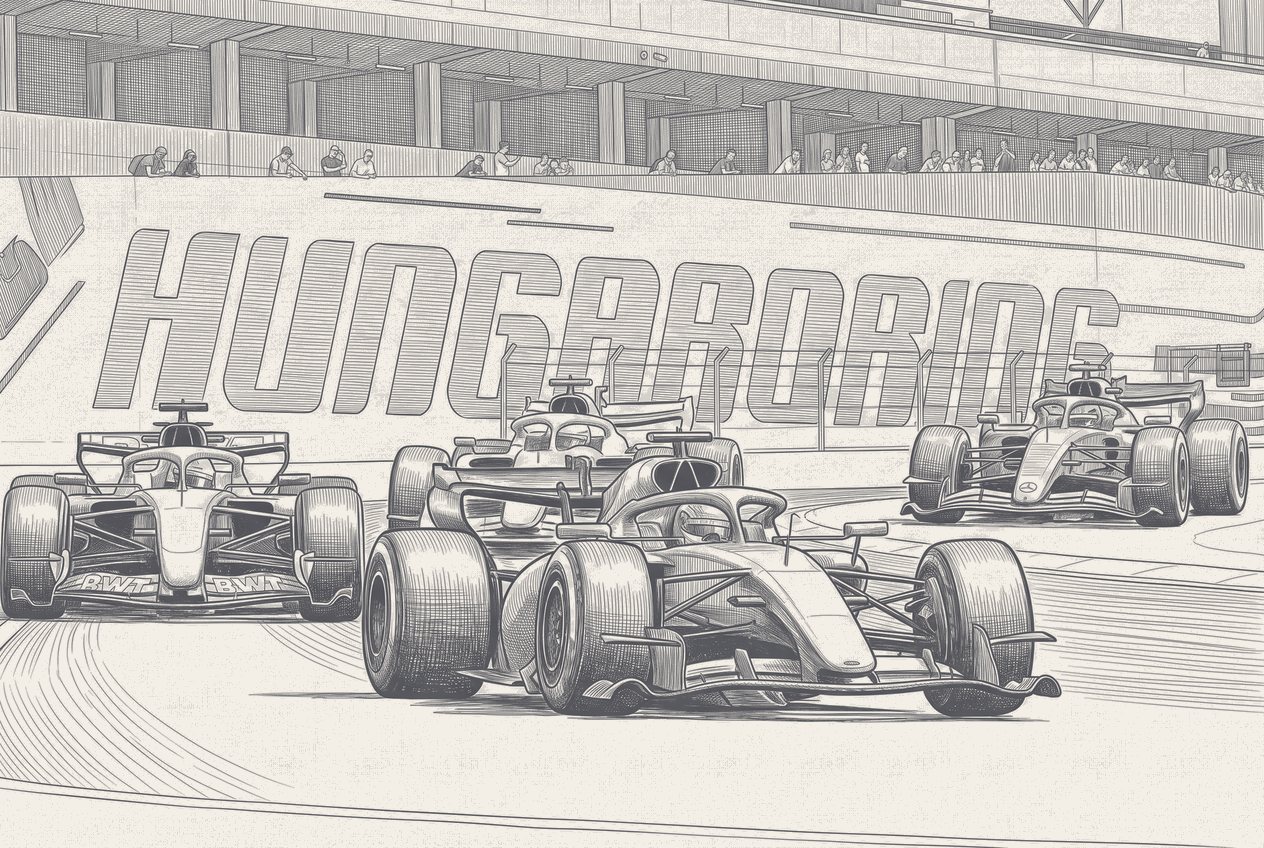
Then Budapest, one of the slowest and most technical circuits F1 visits, produced a race those same people enjoyed. The most-upvoted diagnosis in the RaceFans thread came from a commenter posting as f1alex, who tied the mood directly to the circuit: "the slower and twistier tracks can actually provide some proper racing, whereas the faster classic tracks don't race very well with these regulations. If the cars raced like this on every track I doubt many people would have too many complaints about the current regulations." A second high-scoring commenter, Nulla Pax, gave it an eight with the reservation still attached: "it wasn't at all what I wanted to happen, but it seemed more genuine than what we have had so far and never felt like a foregone conclusion."
Read f1alex's comment twice, because it is doing more than praising a race. It is proposing that the 2026 cars race well at one kind of circuit and badly at another, and that the difference is the layout, not the field. If that is right, the same weekend can be written up two opposite ways. One version says the regulations are fine and the calendar is the problem, that a schedule stacked with fast, flowing classics is simply the wrong venue set for this generation of car. The other version says the cars only come alive when a track slows them to a crawl and hides the deployment mechanic, which is less a defence of the rules than a description of their one working condition.
Neither reading is dismissable, and that is what makes Hungary awkward for both camps. The critics cannot wave away a race their own community scored highly, and the regulations' defenders cannot claim the win without also claiming f1alex's caveat that came bolted to it. A single result is being asked to serve as evidence for and against the same rulebook, and it can, because the thing it actually measured was a low-speed circuit, not the formula in general.
What kept the afternoon from being a slow-track procession was the jeopardy at the front. Lando Norris was the class of the field all day, taking McLaren's first win of 2026 and calling it to The Race "some of the best pace I've had." The result still hung in the balance because his team mate Oscar Piastri had jumped him at the start and led until a gearbox failure ended a likely McLaren one-two. Take that away and Nulla Pax's "never felt like a foregone conclusion" does not hold; a dominant car uncontested at a track with few overtaking spots is exactly the race the base has been complaining about. Budapest got the benefit of a genuine intra-team fight that only ended by mechanical failure.
The second half of the season is where f1alex's theory gets tested rather than argued. If the deployment complaint really is a function of circuit speed, the pattern should hold: the technical, lower-speed rounds should draw scores like this one and the fast venues should draw the yo-yo verdict again. The Dutch Grand Prix on August 23 is the first data point after the break, and the poll thread will be open within an hour of the flag.