A Jaguar customer team backed up the field in Tokyo. The works Jaguar it collected expected a loyalty the deal never contained..
When the regular pit window opened in the first Tokyo E-Prix, Sebastien Buemi lifted. His Envision had climbed from 13th to second on an early attack-mode gamble, and now, as The Race reported, he dropped four seconds in three corners on a team instruction, bunching Edoardo Mortara, Antonio Felix da Costa and Pascal Wehrlein onto his gearbox at Turns 6 and 7. Two corners later da Costa was in the TecPro barrier and Wehrlein's Porsche had lost its front wing and a suspension corner. The two men fighting for a race win were also fighting each other, and the car that set it off drove away.
Buemi did not dispute what he had done. He told The Race his slow-down was ordered to help his team mate Joel Eriksson through the field, that "I got instructed to do that and I just did what the team told me to do," and that "it's not forbidden to do that." His account is not a denial, it is a description of a team call executed as instructed, which is exactly why the driver he collected did not aim his anger at him.
Da Costa put the blame one level up, and in doing so he named the thing the incident was actually about. "I can't be mad at Seb because he is only following orders from his team," he said, "especially them being a Jaguar customer team, I would have hoped for some sort of comms or a warning." Then the line that turned a racing incident into a business story: "the one car that doesn't have the same colour as mine that I am hoping to get a slightly easier time from, they put my race in the bin today." Da Costa drives the works Jaguar. Envision runs Jaguar power. He expected the shared badge to be worth something at Turn 6, and it was worth nothing.
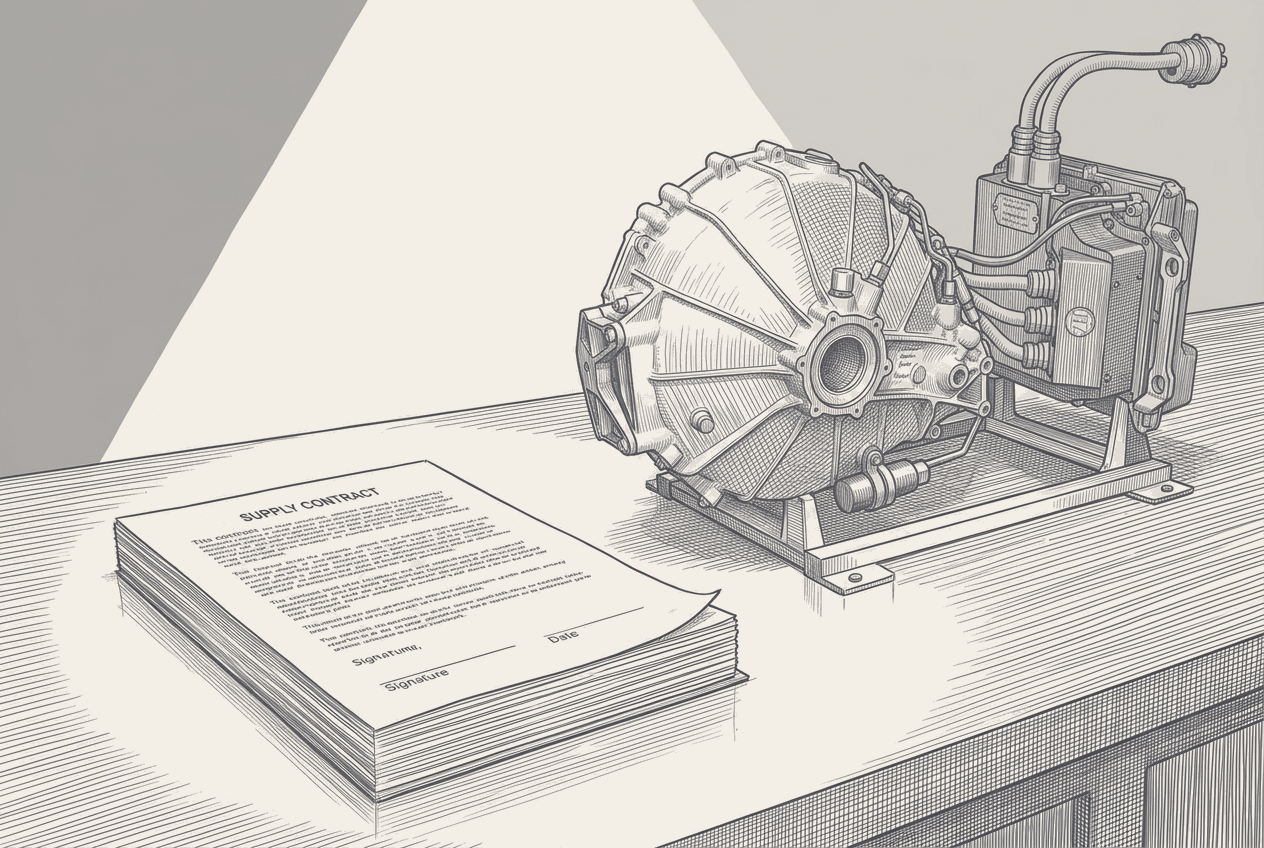
That expectation is the interesting part, because it describes a loyalty a customer powertrain deal does not contain. A manufacturer sells or leases its powertrain to a customer team to get a second and third car on the grid, more running, more data, and a revenue line that offsets the cost of the works programme. Jaguar gets all of that from Envision. What it does not get, and cannot write into the deal without inviting the stewards, is a customer's agreement to sacrifice its own Saturday to protect the works car. Envision had a live reason to slow the field, its own driver climbing through it, and on the day that reason outranked any goodwill da Costa was counting on.
Wehrlein read the same event as something closer to collusion, and drew the line the paddock actually polices. "It goes way too far to use your customer team to back off the group," he told The Race, before separating the accepted from the unacceptable: "there's always a bit of a game that towards the end of the season, you're supporting the best guy in the standings, that you're not driving super hard against him or that you swapped a position or whatever. But to actively change the race, we've never done that." The distinction is not whether powertrain alliances exist. Everyone agrees they do. It is whether a supplier can reach into a mid-season race and rearrange it through a customer, and Wehrlein's answer was that Tokyo crossed from the first thing into the second.
The cost landed on the drivers who were promised nothing and the one who assumed too much. Wehrlein took a 10-second penalty for the contact with da Costa, and by Saturday evening had handed his nine-point championship lead to Mitch Evans. Da Costa scored nothing from a race he believed he had won on strategy. Buemi, who caused all of it by lifting, served a five-second penalty from earlier in the race and finished with his own view that he had not made many friends. Sunday's race reshuffled the order again, and neither Wehrlein nor Evans left Japan leading the championship.
Formula E is a useful place to watch this because its grid is dense with these relationships, works teams selling powertrains to customers who then race them, and the 2026 title is down to a nine-driver fight into a single London weekend. When the margins are that thin, the powertrain-supply chart starts to look like a map of who might get out of whose way. Tokyo was the reminder that the map is not binding, and that a driver who mistakes a supply contract for an alliance is reading a document that was never signed. London decides the title on the same grid, with the same wiring, and now with the trust visibly gone.