Yamaha will supply every Moto3 engine and chassis from 2028, turning the Grand Prix ladder's first rung into a single make.
On June 25, at the Dutch TT in Assen, MotoGP and Yamaha confirmed that from 2028 the Japanese manufacturer will be the sole supplier of Moto3 engines and chassis, a six-year agreement running through 2033. The deal converts the entry class of Grand Prix racing into a single make, ending an open formula that today lets any manufacturer build a Moto3 bike within the rules.
Moto3 has run as an open category since it replaced the two-stroke 125cc class in 2012, built around a 250cc single-cylinder four-stroke and contested today by KTM and Honda, with KTM also present through its GasGas and Husqvarna brands. Yamaha does not currently field a Moto3 entry, so the agreement hands it a class it has sat out, replacing the KTM and Honda machines that fill the grid now. The stated reason for the switch is cost: GPblog reports the move is aimed at reducing costs for the championship and flattening a field where a factory-backed package has been the price of competing.
The bike, and the jump in size
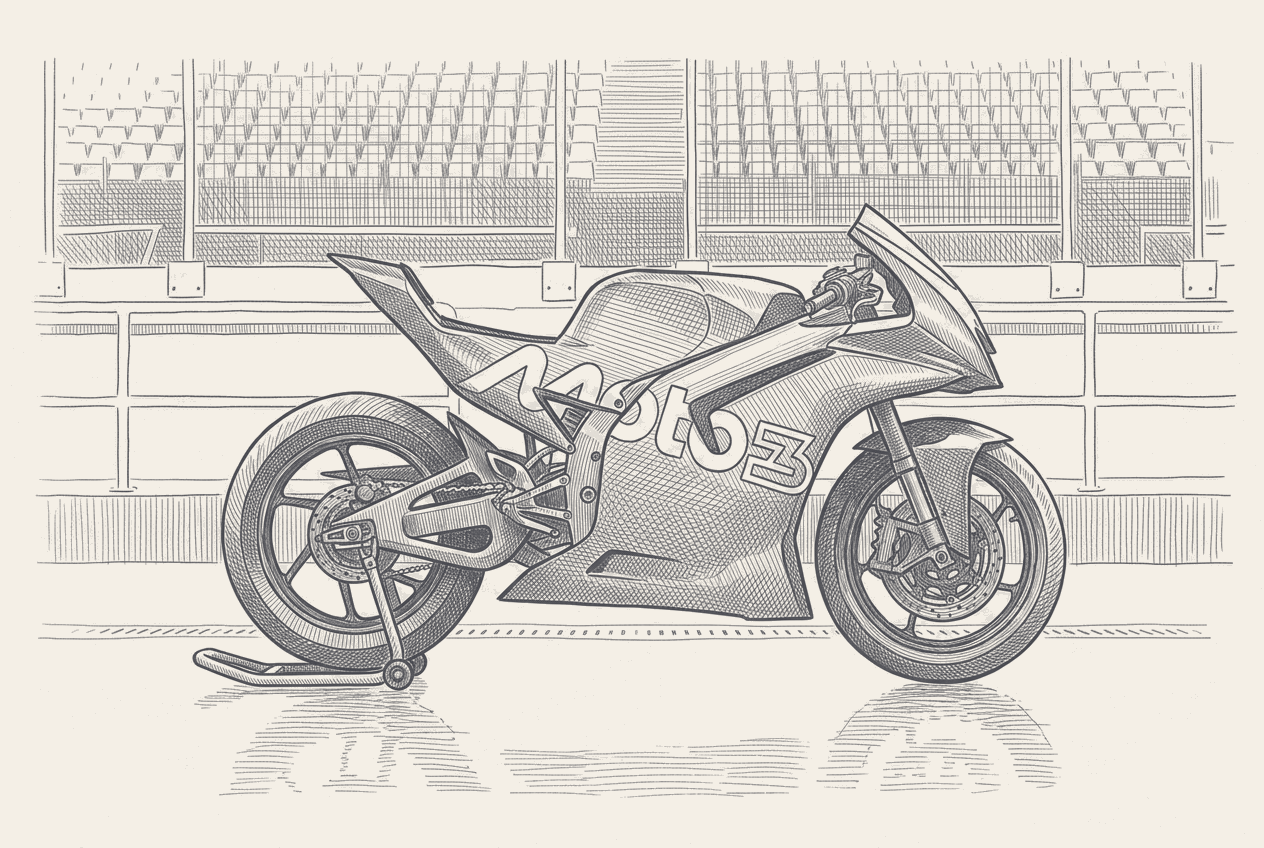
At the centre of the project is a prototype Yamaha is building on its CP2 production platform, the 689cc parallel twin that powers road bikes including the R7, the MT-07 and the Ténéré 700. That redraws what a Moto3 bike is. The current machines are 250cc singles; the new one roughly triples displacement and adds a cylinder. The CP2 is one of Yamaha's most widely used road engines, so the racing bike will share its basic design with machines a customer can buy, a road-to-race link the race-only 250cc single never had.
Size is the point Yamaha keeps returning to. The prototype targets a superior power-to-weight ratio over today's bikes and a full-size chassis closer to Moto2 and MotoGP dimensions. The argument is developmental: a 250cc single is smaller and lighter than anything above it, so a rider stepping up from Moto3 today meets a wide gap to the 765cc Moto2 bike and the 850cc MotoGP machine arriving for 2027. A larger entry-class bike narrows that jump.
Standardisation will not make the bikes identical. The engine will be a standard production-based Yamaha unit, while other parts will be adjustable by the teams that run them, preserving a margin of engineering competition between squads. That is the model Moto2 has used since 2019, where every rider runs a spec Triumph 765cc triple and the teams build around it.
Cost control, and the 'Yamaha Cup' worry
Carlos Ezpeleta, MotoGP's chief sporting officer, framed the deal around access. He called Moto3 "most often the first professional step of racing for riders who go on to become the global superstars," and said the project sets out to create a global platform for young riders and to increase accessibility.
The objection writes itself: one manufacturer owning the entry class invites the label of a "Yamaha Cup." Paolo Pavesio, managing director of Yamaha Motor Racing, moved to head it off, stressing that Yamaha branding will not be at the forefront of the project and describing the aim as "a platform capable of supporting riders, teams and championships for many years to come."
Triumph's Moto2 deal shows why the worry is not idle, and also why it may be manageable. Triumph supplies only the engine in Moto2, and the class has never been called a "Triumph Cup," because chassis builders like Kalex still define the bikes. Yamaha's footprint in Moto3 runs deeper, covering both engine and chassis, so brand neutrality will rest on how much the team-adjustable parts genuinely differentiate one bike from another.
The platform reaches down the ladder
Below the world championship, the project extends further. From 2029 the FIM Moto3 Junior World Championship, the rung beneath, is expected to adopt a lower-specification version of the same machine, and MotoGP says regional series are in talks to join the platform. The spec bike, then, is designed to run the length of the junior pyramid rather than sit only at its top.
What the open formula gave the class was a manufacturer fight, the KTM and Honda development war that also pushed costs up and seeded factory-aligned junior teams scouting riders from the bottom. Those manufacturer ladders, KTM's Ajo programme chief among them, turned Moto3 into a scouting ground as much as a championship, and a single-make grid changes what that ground rewards. What the spec formula gives is a cost ceiling and a common yardstick, with the engineering contest narrowed to the parts teams may change. For a category whose job is to sort riders rather than crown a manufacturer, that is a defensible swap, and it is the one Dorna and Yamaha have placed for six seasons.
Yamaha begins testing the prototype later this year, with the public reveal set for 2027 and the first races on the new bikes in 2028. The class that launched recent graduates like Jorge Martin and Pedro Acosta will look and sound different by the time the next ones arrive.