The cheap World Rally Car assumes somebody will sell you an engine. Neither new constructor is relying on that..
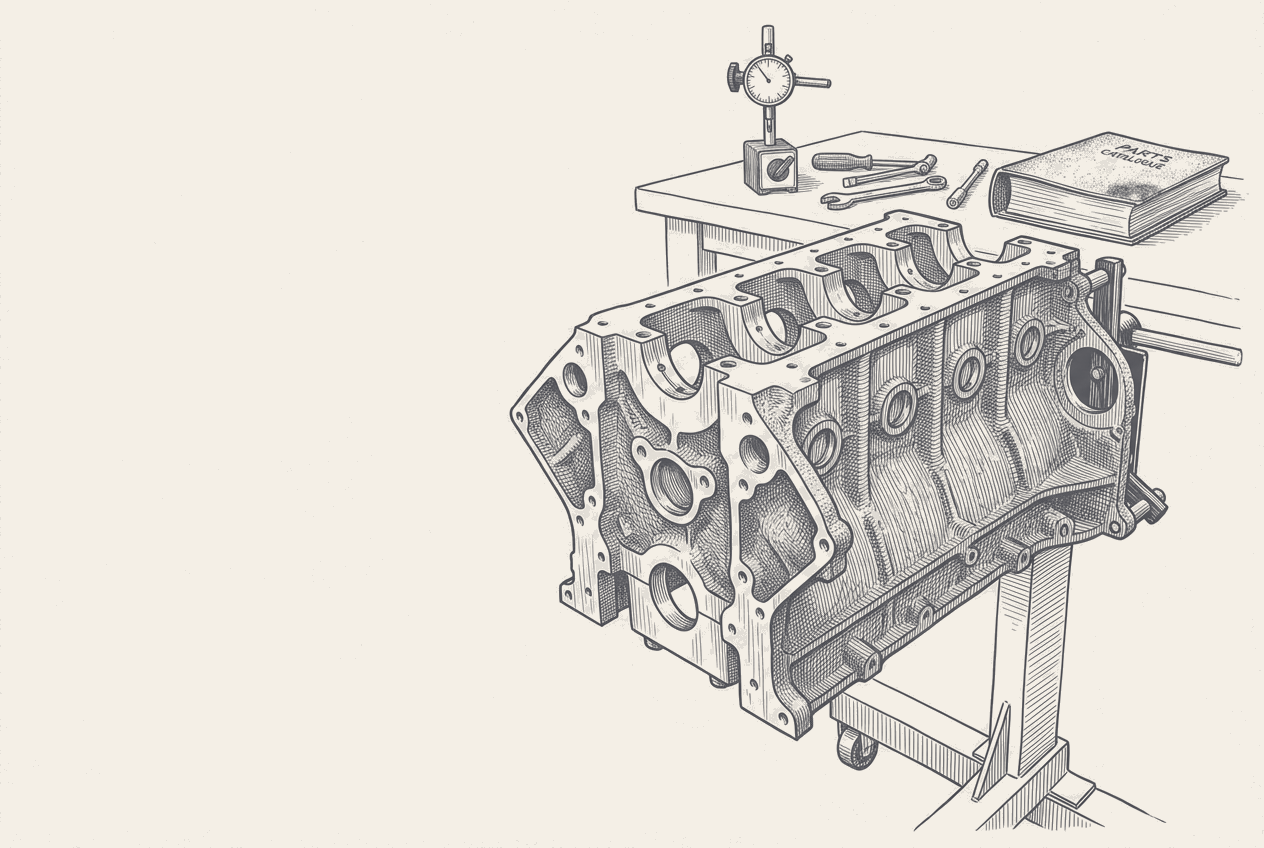
WRT Rally1 Spain said on 2 September that it is developing its own engine, based on a production unit already homologated in Group A, and put the reason in writing rather than leaving it to be inferred. "In principle, using an existing Rally2 engine is an obvious route, but the reality is that the manufacturers producing these engines are not currently set up to supply independent constructors with the number of units that a program like this requires." The statement is carried by DirtFish and attributed to the team rather than to a named person.
345,000 euros is the figure the whole 2027 formula is built around. The FIA announced it on 11 December 2024, describing the WRC27 technical regulations as delivering a cost reduction of more than 50 per cent against the outgoing Rally1 cars, with a sustainably fuelled internal combustion engine as the opening configuration and provision for hybrid or electric powertrains later. Halving the price of a top-class rally car is not an engineering achievement on its own. It is a purchasing one, and it depends on parts already existing at a price somebody else has paid to develop.
Reporting of the FIA's World Motor Sport Council decision in December 2025 described the new spaceframe cars as employing engines, suspension, running gear and brakes from the current Rally2 category. That is the mechanism by which the number comes down. A note on what this piece rests on: the FIA's public regulations index carries the current Rally1, Rally2 and Group A articles of Appendix J and no separate WRC27 technical document, so the account here is drawn from the FIA's own announcement and from trade reporting of the Council decision, not from a regulation text this run was able to read.
Lionel Hansen, who runs the other new constructor, described his engine in August in terms that look like agreement dressed as disagreement. RallyOne's unit, he told DirtFish on 15 August, "at the moment, it comes from a Skoda component, but we have another option also for the engine which we own, our own homologation". He gave three reasons for holding that option, and only the first is about performance: technical reasons, "also for delivery reasons, also for parts".
Two projects, then, have independently reached for an engine they control, and neither has cited lap time. WRT Rally1 Spain says the market cannot supply it and has stopped waiting. RallyOne is being supplied and is keeping a homologation of its own in reserve against delivery and spares. Those two positions are not the same position, and the gap between them matters: a Skoda unit in one prototype is evidence that components can be bought, and it is not evidence that engines can be bought at the rate a season consumes them.
Participation is what turns that distinction into a number. The Council's December 2025 communication, as quoted in DirtFish's report, requires that a homologated car "must contest at least fifty per cent of WRC events in its first year with a minimum of two cars per rally, increasing to full participation across all events from the second year". Two cars at half a calendar, then two cars everywhere, is a service load rather than a build. It is the point at which an engine stops being a thing a constructor obtains once and becomes a thing it must keep obtaining.
No Rally2 engine manufacturer has said anything on the record about any of this. Skoda, Toyota, Hyundai, Citroen and M-Sport have not been quoted on whether they will sell to independent constructors, at what volume, or on what lead time, and the only voice on the supply question in either DirtFish report is the voice of the party that wants to buy. That is a gap in the reporting rather than a finding, and it is the gap where the answer to the cost cap's central assumption sits.
RFEDA is funding the Spanish project, which the FIA described on 23 April 2026 as the first time one of its member clubs has actively supported a constructor's entry into the World Rally Championship. Roberto Mendez's RMC Motorsport, a builder of Group N5 cars for close to a decade, is doing the engineering, with the Spanish engineering firm Piedrafita collaborating. Manuel Avino, the RFEDA president who is also the FIA's Vice-President for Sport in Europe, is quoted in the FIA's own announcement of the partnership.
Rally Croatia in April 2027 is WRT Rally1 Spain's debut target, followed by Spain, Portugal and the two South American rounds. RallyOne has set 1 November 2026 as its own decision point on whether it makes Monte Carlo.