Istanbul Park signed, BYD in the room: F1's leverage week is the cleanest read on the calendar's next decade.
The week began with a five-year Turkish Grand Prix deal for 2027 onward at Istanbul Park and ended with BYD's executive vice-president Stella Li putting on the public record her earlier Shanghai meeting with Stefano Domenicali. The two stories are linked even when read separately. They become the same story when read together. F1, with the European leg of the 2026 calendar exposed and the new power-unit regulation under live correction, is hardening two different arguments about its own future at once. The first is geographic. The second is industrial. Both are leverage plays, and the field has read them as such.
What the Istanbul Park deal actually locks in
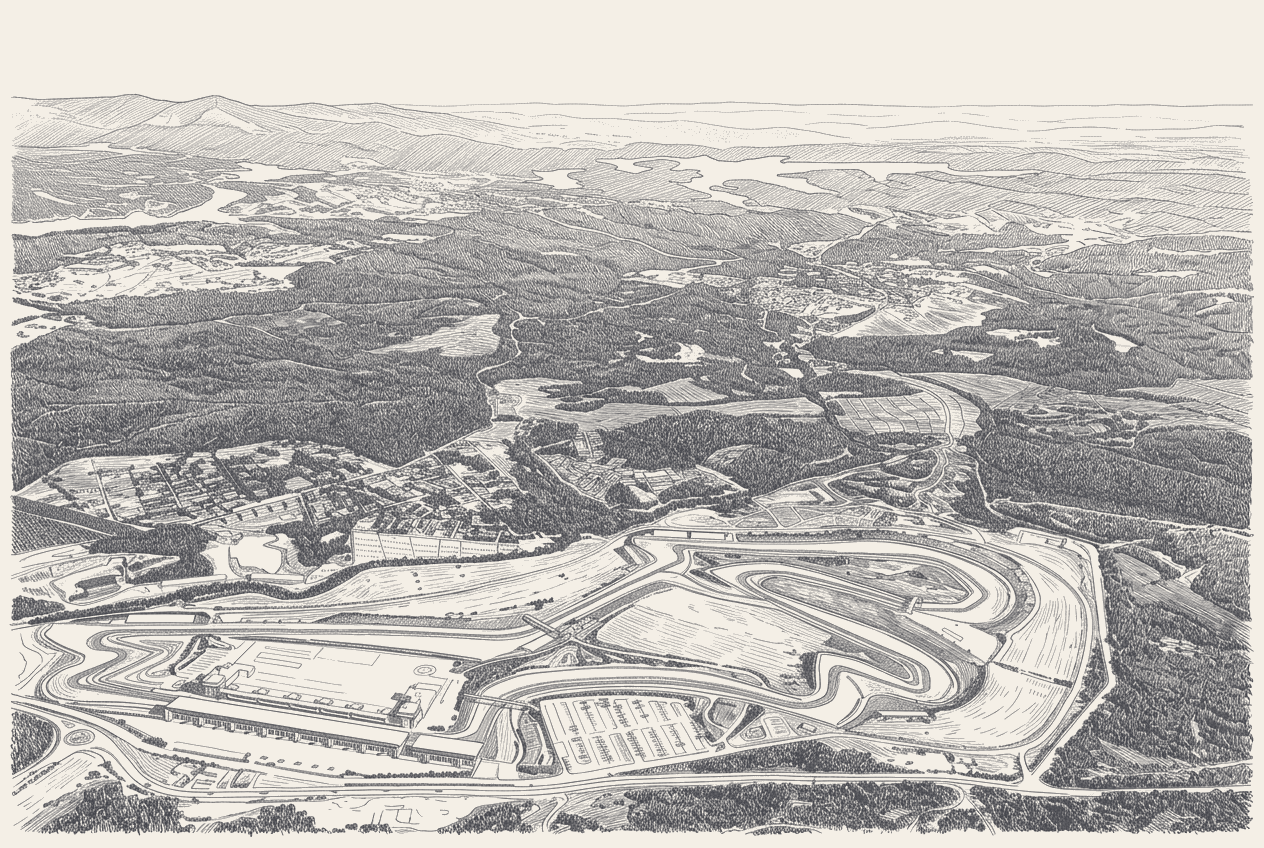
Formula 1 confirmed on April 24 a five-year Turkish GP deal running through 2031 with Istanbul Park as a fixed (non-rotating) round. President Recep Tayyip Erdogan, Domenicali and Mohammed Ben Sulayem co-presented the deal in Istanbul. The layout stays unchanged, which is the unusual line of the press release: Turn 8 returns in its full eight-apex 2005 specification, not as a corrected modern version. The track will host its first F1 weekend on this contract in the 2027 season, slotting into the late-summer window that has been the calendar's softest constructible joint since the 2022 reshuffle.
RaceFans noted the deal sits inside a 24-race ceiling that has been the subject of months of internal F1 calendar argument. The 24-race cap is, per Concorde, a hard ceiling agreed with the teams in 2024. Adding Istanbul does not break that ceiling. It pushes the calendar planners closer to a swap rather than an addition, and it sets a five-year horizon on which one of the existing rounds will not renew. The European leg is the geometry most exposed by that math. Imola's contract expires after 2026. The Belgian round is on a year-by-year extension. Both have publicly resisted the rotation framework F1 floated in late 2025.
The deal's accent is on geography, not retro-tracks. Istanbul Park is positioned to anchor a future Asia-to-Europe trans-shipment block (Singapore, Japan, Qatar, then Istanbul, then the European autumn) which compresses freight cost across what is currently the longest gap on the schedule. That logistical argument is the one F1 has reached for in every paddock briefing on the deal: Istanbul is sea-and-rail equidistant from the Gulf and southern Europe, and the calendar window after Singapore loses six days of freight-floor time when Istanbul replaces a Western-European round.
The fan signal was clean. The Istanbul announcement drew 16,916 upvotes and 581 comments on r/formula1, an engagement score 2.6 times the next-highest F1 thread of the week. Reddit reaction read as a unified want, with a sub-thread of "drop one of the four American rounds" that captured the cohort the calendar's logistics team is, in fact, also looking at.
The BYD meeting is the real industrial signal
PlanetF1 reported on April 28 that BYD executive vice-president Stella Li had met Domenicali in Shanghai during the Chinese Grand Prix weekend, with Li placing the meeting on the public record this week. Autoblog framed the meeting and carnewschina.com picked up the technical fit logic: BYD is weighing three roles, team entrant, hybrid PU component supplier, or sponsor, and the new 350-kilowatt MGU-K output (up from 120 kW under the previous formula) is the explicit fit argument. BYD designs and manufactures its own batteries, motors and power electronics. The technical relevance is real and not just sponsorship optics.
The component-supplier line is the load-bearing one. F1's 2026 PU formula homologates four manufacturers (Mercedes, Ferrari, Red Bull Powertrains-Ford, Honda RBPT) for the first cycle. None of them currently sources its hybrid battery cell or stator inverter from a Chinese supplier. The prevailing arrangement has Mercedes-AMG using internal HPP cell-pack engineering, Ferrari using a co-developed Eligendi battery package, Red Bull Powertrains using an inherited Ford-affiliated electronics partner, and Honda RBPT shipping its own Sakura-developed package. BYD entering the supplier conversation is not a marginal addition. It is the first conversation the FIA has held in this cycle with a battery and power-electronics company at higher unit volume than any of the existing four combined.
The FIA's framing in the same week was not coincidental. The FIA's "we cannot be hostage to automotive companies" line cleared 1,639 upvotes and 228 comments on r/formula1, with the comment thread reading the line as a thinly veiled response to Audi's and Honda's hesitation around the new PU formula. The hostage line and the BYD meeting fit the same diagnostic. F1 wants leverage. Suppliers, not just manufacturers, supply leverage. BYD provides leverage. Audi and Honda are paying attention.
Why the two stories belong in one frame
The two announcements rhyme on intent. Istanbul Park is the geographic version of the same argument the BYD meeting carries on the industrial side. F1 has, in the third year of its current Concorde, learned that fixed European rounds and a closed PU-supplier list are both renewable assets the championship can be priced out of. The Imola, Spa and Hockenheim conversations through 2025 made the geography case. The 2026 PU regulation's first in-season correction (the 350-kilowatt super-clipping fix the FIA pushed through on April 21, four rounds in) made the supplier case.
Domenicali's defence of the 2026 spec in the same week ran in the opposite direction. In a Scuderiafans interview he said fans had a "short memory" about the turbo era and pushed back on the artificial-overtaking criticisms of the 2026 spec. That position is more credible if F1 holds the suppliers and the markets in reserve. Nigel Mansell publicly dismissed the comparison on April 26, pointing out that 1980s turbo cars were not power-managing the way the 2026 cars are. The Mansell read is fair on the engineering. It is also a foreseeable read for Domenicali, and the Istanbul deal plus the BYD meeting plus the FIA's hostage line are the architecture inside which Domenicali can absorb a Mansell-shaped critique without it being structural.
The BYD path remains optionality, not commitment. Reuters and PlanetF1 both noted the meeting did not produce an MOU. BYD has run no F1 simulator hours, no dyno work and no FIA-tracked supplier qualification. The 2026 PU formula closes its second-cycle homologation window in 2030 and the first opportunity for a new entrant or component supplier to register is the 2031 spec sheet. That gives Audi (committed and on the grid in 2026) and Honda RBPT (committed through 2030 but with on-and-off public ambivalence) five years to behave. Five years is also the term of the Istanbul Park deal. Both clocks were started in the same week, almost certainly not by accident.
What the field is reading
The community-pulse signal landed in the same place the paddock signal did. Reddit's response to the BYD confirmation thread (3,913 upvotes, 358 comments) pulled the same shape as the FIA-hostage thread: a fan-side recognition that the championship is moving its leverage axes around quickly, and that the move is not random. The Istanbul Park thread sits next to the BYD thread on the week's engagement chart. They are the two largest non-livery signals of the week, and they pair without prompting in fan commentary.
The teams have stayed quiet. McLaren's pre-Miami media morning produced Andrea Stella's parts list for the MCL40 upgrade and a "wider operating window" framing. Mercedes used the same window to confirm no Miami upgrade. Neither commented on Istanbul or BYD. The paddock convention on calendar and supplier news is to let the FIA and FOM hold the ball, and that convention is the third leverage lever F1 needs intact: the teams' willingness to defer to the championship's strategic architecture as long as the cost-cap envelope and the technical regulations remain stable.
The five-year window
The horizon the two announcements share is 2031. Istanbul's deal expires after that season; BYD's earliest realistic supplier-qualification window opens at the same point; the FIA's PU homologation cycle closes the door on a third-cycle entrant a year later. The European-rotation conversation, the cost-cap renegotiation, and the next Concorde all fall inside that window. F1's argument this week is not that it has decided what the post-2030 championship looks like. The argument is that the next decade will not be negotiated under the same constraints the 2024 to 2026 cycle imposed.
Istanbul Park returns in 2027. BYD's involvement, if it happens, follows the FIA's homologation schedule rather than its own. The two are not on the same calendar; they are on the same shape. The shape says: the championship's strategic optionality is wider than the existing supplier lock and the existing European footprint suggests. The Miami weekend is the field's first race-weekend press session since both announcements landed. The questions Domenicali takes there are the questions this publication will be tracking on the Sunday transcript.