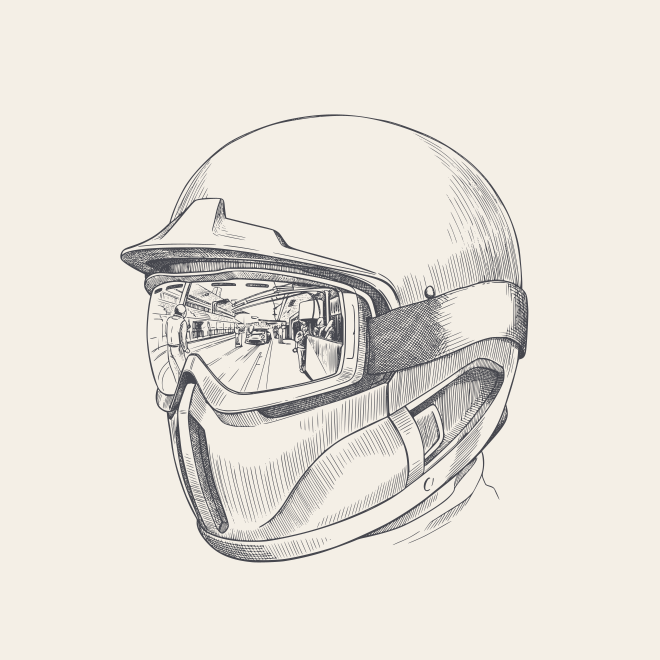
StarTalk put F1's 2026 rulebook on the physics bench; the sharpest data point was Hamilton admitting he loses tenths he cannot feel..
The 2026 Australian Grand Prix produced 120 overtakes; the 2025 running managed 45. StarTalk built a 28-minute episode around why, sending Neil deGrasse Tyson and Gary O'Reilly to the Miami Grand Prix to put Formula 1's 2026 regulations on the physics bench, with a Ferrari engineer and Lewis Hamilton called as witnesses. It is the rare crossover that treats a rulebook as a science problem rather than a controversy.
Watch: StarTalk: the physics of F1's 2026 rules, feat. Lewis Hamilton (28 min)
Tyson closes the episode by framing the whole rules cycle as the scientific method wearing a fireproof suit, iterating from data toward the next innovation. The show earns that framing in the chassis segments and strains it in the energy ones, and the gap between the two is exactly where the season's real story sits.
The physics the show gets right
Mass is where it starts, and it is the cleanest chunk. The 2026 cars are smaller, narrower and lighter, which the show runs through Newton's second law: for a given engine force, less mass yields more acceleration. That is first-year physics correctly applied, and it is the one part of the rulebook that needs no asterisk.
The floor is the subtler retreat. Teams have stepped back from the venturi underbody that sucked the car down through fast-moving air, because that system could snap between large downforce and a sudden loss of it, so the 2026 cars ride slightly higher on a flatter floor. A Ferrari engineer the show introduces as Federico called adapting to it a "beautiful headache," which is the most quotable line in the episode and also an honest description of trading a known instability for a new balancing act between pitch and diffuser.
Active aero is the change the broadcast leans on hardest. Front and rear wings now open on the straights for low drag and close through the corners for downforce, driver-toggled several times a lap from a steering-wheel button, the system the FIA calls Straight Mode and Corner Mode after retiring DRS. The show reaches for a bricks-and-wings analogy about friction and load to get a lay audience to the idea that grip and drag are the same coin spent two ways, and it mostly lands.
The energy layer is the real story
Energy is where the episode stops being a tidy explainer and turns useful. The MGU-K now delivers up to 350kW, roughly triple the old figure, split close to 50/50 with the V6, and the battery does not carry enough charge to deploy for a full lap. That single shortfall is the engine of the season. A car reaches a straight with energy to spend while the car ahead has run dry, and the pass follows from the arithmetic more than from a late lunge.
Drivers gave the ugly side of it a name. The show reports they call the recharge-under-acceleration behaviour "super clipping," because it saps power exactly when they want it most, and that after driver pushback in the break before the Miami Grand Prix the FIA re-tuned the deployment, trimming maximum recharge while lifting peak output. Paddock Notes has tracked the same tuning thread from the cockpit end, through Fernando Alonso's complaint that the 2026 car overtakes with "no driver talent," just one button.
The overtaking number is the payoff the show sells, and it is real but contested. A jump from 45 passes to 120 at Melbourne is a genuine step change, yet the same analysts note how many were immediate counter-passes, the yo-yo battles where two cars trade one position more than once a lap because whoever holds charge takes it and whoever does not gives it straight back. The episode nods at this through a former Ferrari driver, now head of the Ferrari Academy, who frames energy as a new tactical layer rather than a clean win for the racing.
Hamilton's tell
Hamilton is the segment that justifies the show. Presented as a remote video call rather than a garage sit-down, a circular inset floating over a James Webb Space Telescope backdrop, he told StarTalk that he loses tenths of a second to software and energy-deployment errors he does not feel in the car and finds only afterward, reviewing data with his engineers.
That admission is the whole 2026 argument in one sentence. When a seven-time champion cannot feel the thing costing him lap time, the skill the formula rewards has migrated from the parts of a lap a driver senses, the braking point and the slip angle, to an energy budget managed against software that is invisible from the cockpit as much as from the grandstand. It does not prove the racing is worse. It does explain why the drivers keep saying it feels different from anything they have driven.
The space tangent is the human note, and the show lets it run. Hamilton talked about the Webb telescope and the film Interstellar, StarTalk handed him a mission patch from the 44th ISS expedition to match his car number, and for a few minutes the episode is two enthusiasts rather than an interview. It is the kind of material a physics show can draw out of a driver that a race broadcast never reaches.
A sidebar worth keeping: the three kinds of G
Braking is where the G-force segment gets vivid. The show separates gravitational G, 1G on Earth, a sixth of that on the Moon, zero in orbit, from the G a car generates under its own violence, and puts Miami's hardest braking zones near 7G for a fraction of a second, with sustained cornering load of 3 to 4G held for whole seconds at a time.
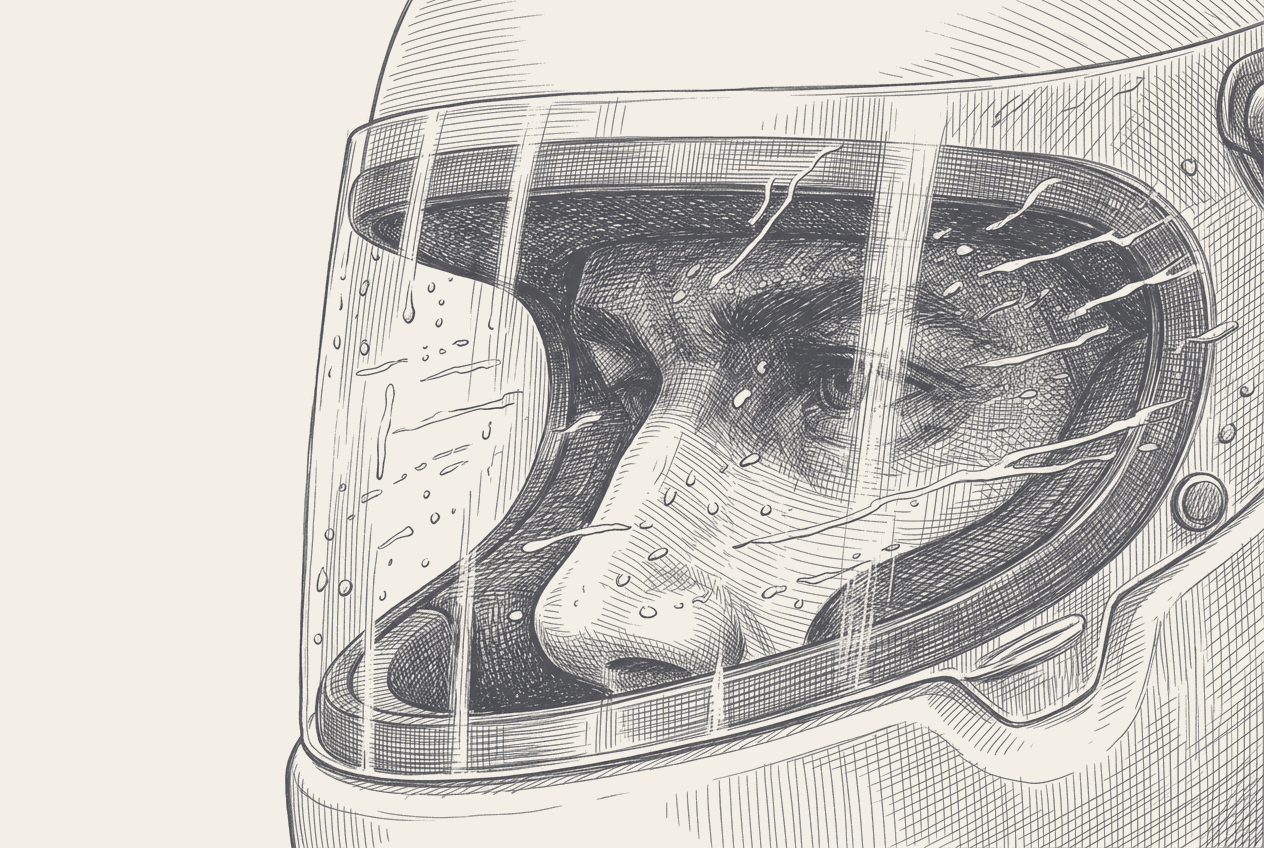
Lateral G is the one that hurts, and the detail is the keeper. Sustained sideways load through a corner taxes the neck far more than the brief braking spike, and the episode lands the point with an image worth stealing: braking hard enough that sweat detaches from a driver's skin and sticks to the inside of the visor. That is precisely the kind of specific a physics show exists to deliver, and a race commentary rarely bothers to.
Whether the 2026 formula is good racing or good arithmetic is the question the episode raises and cannot settle, which is the right place for it to end. Tyson's scientific-method frame cuts both ways: the rules are an iteration on data, and the next iteration is already implied by the yo-yo passes and by the tenths Hamilton cannot feel. StarTalk sends its producer out in a two-seater for a comedy G-force reel and calls it a day. The season it was explaining has five months left to answer the harder question the physics could not.