Formula 1 put a moveable wing back on the approach to Eau Rouge, 14 years after safety concerns took it away.
Five straight-mode zones were available to drivers at the Belgian Grand Prix, per the updated circuit map the FIA issued before the weekend. That equals Albert Park in March as the highest count of any round in 2026, and Spa is the only other circuit on the calendar to reach five. Monaco ran none. Japan ran two.
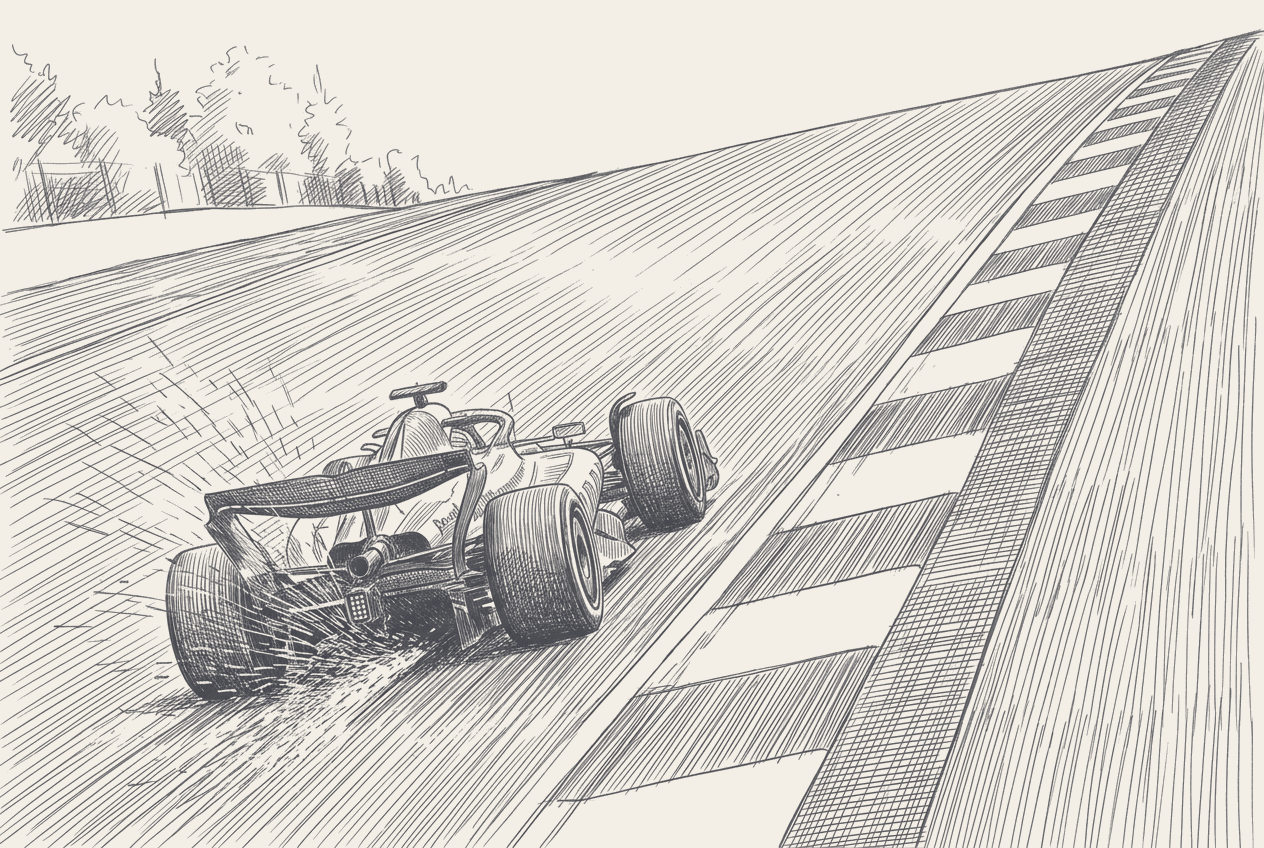
The second of those zones sits on the downhill run between La Source and Eau Rouge. Drivers reached the compression with their wings open, then closed them for the corner, and the sequence continued with a third zone on the Kemmel straight, a fourth on the exit of Stavelot, a deactivation before Blanchimont, and a fifth run to the Bus Stop chicane. Overtake Mode, the power boost available within a second of the car ahead, was confined to the start and finish straight.
Free use of DRS in practice and qualifying was outlawed ahead of the 2013 season, on the grounds that drivers were taking excessive risks with an open wing in pursuit of lap time. That decision is what makes the second zone at Spa notable rather than routine: it returns a moveable wing to that stretch of track for the first time in 14 years, and it does so at the point on the circuit where the argument about open wings and risk was originally most acute.
The corner the wing is not allowed into
Active aero stays shut through Eau Rouge and Raidillon. The FIA drew the zone to end before the compression, which is the conservative call and the one consistent with 2013, and it means the fast part of the sequence is taken in the car's natural configuration.
Oliver Harden, writing PlanetF1's conclusions from the weekend, reports that the 2026 cars now require a downshift through Raidillon, and treats that single detail as the argument against the ruleset at this circuit. Harden's piece is a column rather than a technical report, and the claim has not been published with telemetry attached, so it belongs here as a specific assertion by a named writer and not as a verified figure. A gear change at a named corner either appears in the data or it does not.
Two adjustments therefore now apply to the same short stretch of track, running in opposite directions. One adds drag reduction on the approach. The other, if Harden's account holds, has taken speed out of the corner the approach leads into. The net effect on how that sequence is driven is the thing worth measuring, and nobody has published it.
Energy is the constraint the layout exposes
Fernando Alonso set out the deployment problem in Belgium before the cars ran, telling PlanetF1 and other outlets that Spa and Silverstone are "very thirsty on energy and you cannot deploy on all the straights." His account of the trade is specific: deploy from Turn 1 to Turn 5 and there is nothing left for the rest of the lap, save for the run from Stavelot to the Bus Stop and there is a minute of Sector 2 with no deployment at all.
Alonso attached a comparison to that, saying the cars have significantly less power than last year and less power than F2 once deployment is cut. Spa is the longest circuit Formula 1 visits, which makes it the venue where an energy budget written for a shorter lap has the least room to hide, and five straight-mode zones are one answer to that. They give back on the straights some of what the power unit cannot sustain.
Kimi Antonelli lost the lead to Max Verstappen on the exit of La Source on the opening lap and had it back before Les Combes, then beat Charles Leclerc to the win by 1.952s after retaking the position ten laps from the end. The lead changed hands twice in the first kilometre and once more in the second half of the race, which is not the signature of a circuit that has stopped producing racing.
What rotation does to the question
Spa shares its calendar slot with Barcelona from next season, an arrangement announced last year and met with disappointment at the time. Harden's column reaches the position that the separation may now be the better outcome, on the reasoning that the circuit and the current ruleset do not fit each other.
That framing rests on the downshift claim, which is the part still unverified. A rotating slot also means fewer opportunities to gather the comparison data that would settle it, since the next Belgian Grand Prix under these regulations is two years away rather than one. The FIA's zone map is the firmer piece of evidence in the meantime.
Hungary runs from July 24 to 26, on a layout with no straight long enough to make deployment the defining variable. The next honest read on Spa's zone map arrives when a circuit of similar length and similar top speed appears on the calendar.