Ducati scored ten points at Silverstone, and the reason was how the GP26 turns.
The factory Ducati team left Silverstone with ten points across the weekend, every one of them Marc Marquez's: nine for seventh in Sunday's grand prix, one for ninth in Saturday's Sprint. The Race counted it as the squad's lowest-scoring weekend of the season save for Le Mans, which Marquez missed injured. Raul Fernandez won the grand prix and Aprilia swept the podium; the number that matters more for the title run-in is the ten, and it came down to how the GP26 rotates through a corner.
How the GP26 turns
Ducati's deficit at Silverstone was not reliability, and not a single bad tyre. Crash.net's Lewis Duncan described the mechanism plainly: the GP26 "has to use the rear to turn more, whereas the Aprilia glides through corners," and "when tyres are somewhat more fragile, the Ducati experiences that drop a bit more violently than the RS-GP does." Silverstone's fast, flowing layout rewards a bike that holds corner speed rather than braking hard and firing off slow hairpins, and a machine that leans on its rear tyre to steer runs that tyre hotter the longer each corner stays open.
Fabio Quartararo, watching from a Yamaha in the midfield, read it the same way from outside the garage. He speculated that Aprilia's RS-GP26 was somehow keeping its rear tyre temperature lower through the same corners. Whether the root cause is temperature or mechanical load, the effect was the one Ducati could not engineer around across two days.
The graining, and why the medium tyre only hid it
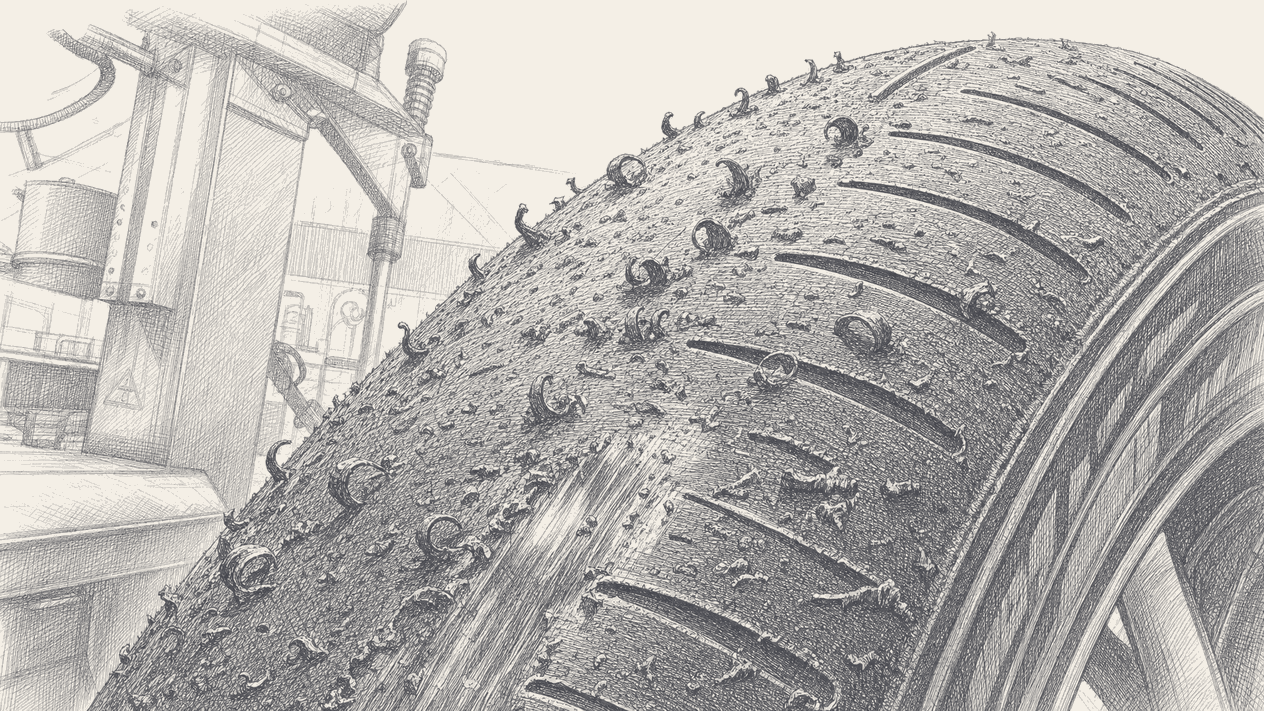
Marc Marquez met the problem first in Saturday's Sprint, where roughly five seconds separated his fastest and slowest laps. He called it graining rather than degradation, a "new feeling" the team "never had" in practice, and it dropped him from the top four to ninth, holding the final point by 0.027s. Francesco Bagnaia hit the same wall and drew the distinction that matters: the trouble "was not the tyre itself, but the effect the Ducati has on it," with both works bikes among the slowest on track in the closing laps.
Every rider switched from the soft to the medium rear for the 20-lap grand prix, keeping the hard front. The medium contained the drop. Marquez said he could "manage in a normal way" on Sunday and the violent fall of Saturday did not return, yet he still finished seventh, his best lap almost seven tenths slower than Fernandez's. A different compound treated the symptom. The pace gap to the Aprilia sat exactly where it had been.
Why the satellite Ducati coped
Alex Marquez took the same GP26 to fourth, was the second-fastest rider in the race, and reckoned he had the pace for second before a Turn 1 mistake while running there on lap 11. His explanation was about riding style: "the faster is the corner, the more I can manage the rear tyre," a smoother line through Silverstone's quick sections that asks less of the rubber than the factory method does. The same machine, ridden more gently, saved what the works bikes burned.
Fabio di Giannantonio came home the next Ducati in sixth, and got there by wrecking his front tyre in the effort to protect his rear. His verdict was blunt: "we are just the second power, let's say. The first ones are the Aprilias, that are incredible." Marquez's own seventh carried a second complication, his physical condition after another right-arm surgery, with endurance the limitation he named; di Giannantonio and Bagnaia had no such excuse and finished in the same stretch of road.
A track-type deficit, not a decline
Silverstone was the second time in six weeks that a corner-speed circuit did this to Ducati. At the Dutch Grand Prix at Assen in late June, Aprilia also swept the podium and the best Ducati was fourth, just under six seconds back, with Marquez again seventh. The GP26's strong weekends have come at stop-and-go tracks like Jerez and Balaton Park, where braking stability and drive off slow corners outweigh sustained lateral load. The bike has not fallen off a cliff. The calendar has stopped handing it the layouts it likes.
That asymmetry is the part that should trouble Borgo Panigale. Aprilia's bad weekends this year have come from incidents, Martin's first-lap crash in Hungary and Bezzecchi's qualifying fall in Germany, rather than from a lack of pace when the bike was healthy. Ducati's bad weekends have been flat pace deficits with nothing to be done on the day. One kind of problem a clean Sunday cures; the other waits on the machine.
Aragon runs on August 30, anticlockwise and stop-and-go, the sort of track that has suited Marquez all season, so the order will probably swing back his way. What Silverstone leaves open is whether the medium-tyre margin that put three Aprilias on the podium is a one-circuit quirk or the shape of the run to the title. Marquez sits 40 points behind Martin with 10 rounds to go, back to the deficit he carried into Germany, and Ducati now has to show the RS-GP26 can be beaten on the tracks that suit it least.