
Maverick Vinales says KTM emailed him a Tech3 contract, took his signature, then voided it two weeks later; he expects to leave MotoGP..
Maverick Vinales said at the Sachsenring on July 9 that KTM sent him a Tech3 contract by email at Mugello, that he signed it, and that "after two weeks, they said this was completely not valid." A signed document treated as never having existed is an unusual thing for a rider to describe on the record, and Vinales did not stop there. He also said he feels "burnt out of this world" and expects to leave MotoGP at the end of the season, floating the Suzuka 8 Hours as the kind of racing he might do instead.
Nine premier-class wins sit behind that statement, which is what makes it more than a disgruntled exit. Vinales has won on a Suzuki, on a Yamaha and on an Aprilia; he is not a journeyman being moved along at the natural end of a career. He is a race-winner who arrived at a circuit describing the exact moment his place on the 2027 grid stopped being a negotiation and became a rejection, and doing it in public rather than through the usual managed silence.
The seat he thought he had
The chronology is the cruel part. Vinales learned in mid-May that Fabio Di Giannantonio had taken the factory-adjacent KTM seat he had expected to hold, so the voided Tech3 contract is not the start of his 2027 problem but its confirmation. By his account the offer came, the signature went on, and the withdrawal followed a fortnight later, which is a sequence that leaves a rider with neither the seat nor the leverage of a clean rejection to point at. What he is left with instead is a story, and the story is the only thing he now controls.
KTM has answered without answering the paperwork. Motorsport director Pit Beirer, at the same Sachsenring media day, said the trouble started when Vinales found the offer was not the factory seat, framed it as the rider turning down a Tech3 place rather than a signed deal being torn up, and told him "there will be a space for you, but we cannot tell you where and what." He did not address the signed document Vinales describes. That is the caveat the account carries: it rests on one side of a dispute the other side has answered only around the edges. Vinales is describing what he says happened to him, and the sharpness of the detail, an email, a signature, a two-week window, is precisely the kind of specificity that a rider offers when he has decided the relationship is already over and there is nothing left to protect.
Burnout is not a metaphor here
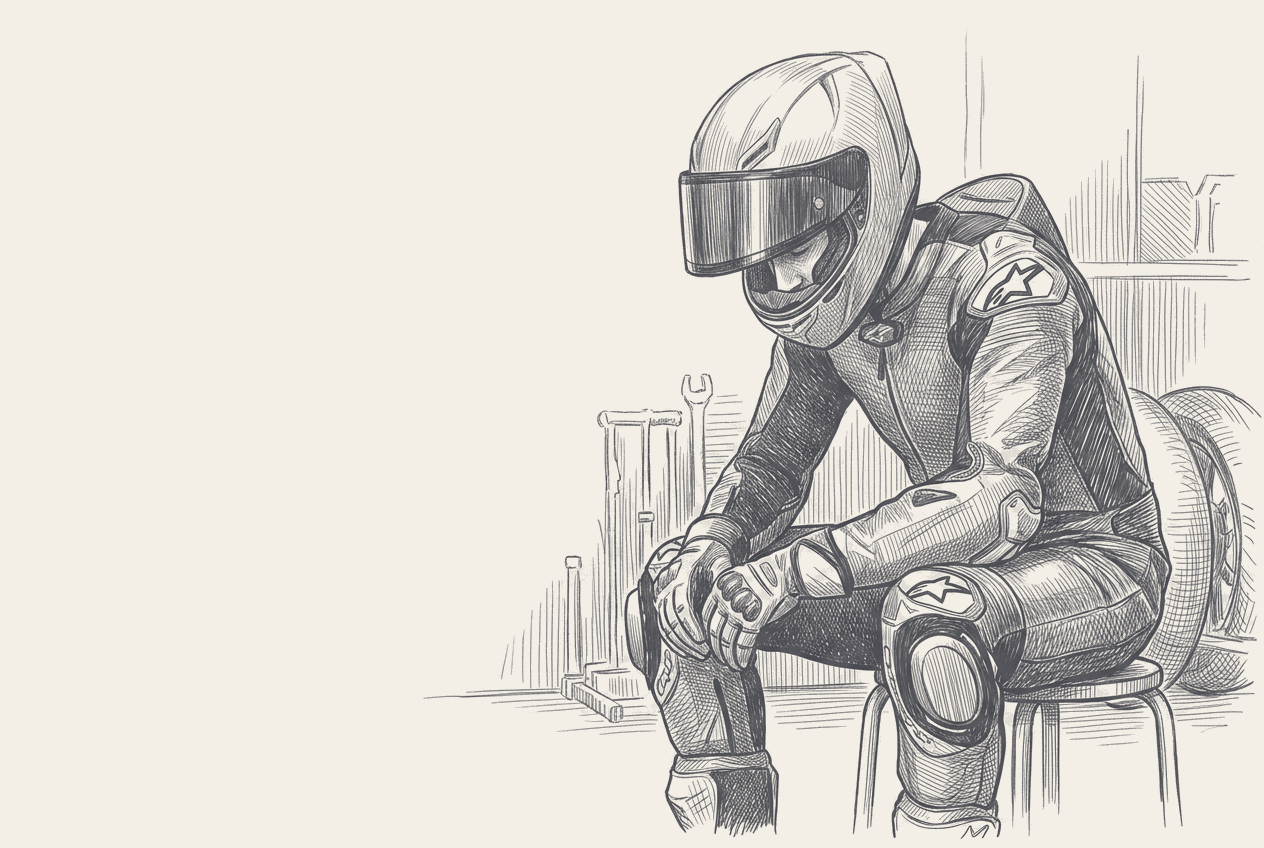
His "burnt out" line reads differently once the injury calendar is laid over it. Vinales has still not returned to full fitness after the shoulder injuries he suffered on the Sachsenring weekend a year ago, so the venue where he chose to say he is done is the same venue where his physical decline began. That is not coincidence a rider stumbles into; it is a man marking an anniversary out loud. A season spent racing hurt, on a bike he expected to keep and then lost, is the literal shape of the exhaustion he named.
Suzuka is the tell in the other direction. When a MotoGP winner floats the Suzuka 8 Hours as his alternative, he is not describing retirement so much as a change of register, endurance racing on four-cylinder machinery, a different rhythm, a different kind of satisfaction, without the weekly grind of a championship that no longer has a competitive seat to offer him. It is the sound of a rider deciding the sport can keep its grid politics and he will take his riding somewhere the terms are simpler.
The squeeze the grid is running
Vinales is not the only veteran saying a version of this at the same media day. Alex Rins, ousted from Yamaha, said he has "nothing in this paddock for next year" and is trying to find a World Superbike ride, a second race-winner on the July 9 microphones pointing at the exit door as the 2027 grid turns over with an estimated five rookies incoming. Two former winners naming the same squeeze on the same afternoon is a pattern, not two coincidences, and the pattern has a cause.
The cause is arithmetic. A premier-class grid of a fixed size, refreshing with a wave of Moto2 graduates as the 850cc regulations arrive, has to make room somewhere, and the room comes from the top of the age curve. That is what sits underneath Vinales' account: not that KTM handled one contract badly, though he says it did, but that a shrinking set of competitive seats is doing to a generation of winners what it always does, moving them along before they are ready to go. Vinales just described the mechanism from inside it, with a signed contract he says was torn up as the evidence.
Whether the paperwork reads the way he tells it is a question only both parties can settle, and the side that could contradict him has answered everything except that. What is not in dispute is the destination. A nine-time winner spent the last media day before the summer break saying he is exhausted and expects to be gone, at the track that took a year of his fitness, while the grid behind him fills with riders young enough to be untroubled by any of it. The German Grand Prix runs this weekend either way. Vinales, by his own account, is already looking past it.