One brand, two ladders: Red Bull's Moto3 squad goes 1-2 at Mugello while its F1 juniors stall, and both sit exams this weekend.
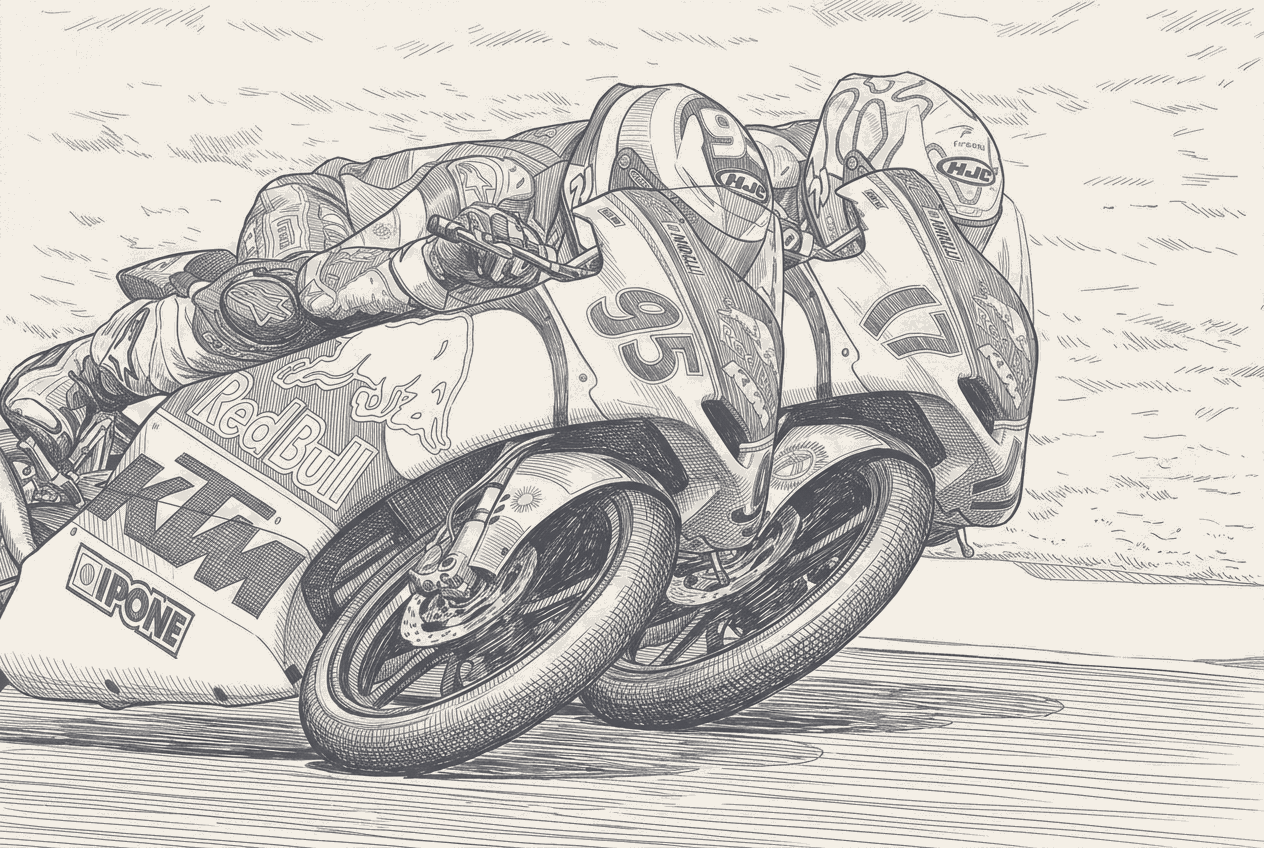
On the final lap of the Mugello Moto3 race on May 31, 17-year-old Brian Uriarte took the lead and held it for a maiden Grand Prix victory, finishing ahead of his own teammate Alvaro Carpe for a Red Bull KTM Ajo 1-2. Five days later, the Red Bull Junior Team's lead Formula 2 asset arrives at Monaco carrying the opposite kind of momentum: Nikola Tsolov left Montreal scoreless, and his third place in the standings now reads more like a high-water mark than a platform. One company's name sits over both garages. The development operations underneath it are moving in opposite directions, and this weekend, with Moto3 at Balaton Park and F2 at Monaco, both sit exams inside the same 72 hours.
The two-wheel ledger
Mugello's result gets stronger the closer you read it. Uriarte won a race the championship leader finished eleventh, so the 25 points for the win came attached to a cut at the top of the table: Maximo Quiles saw his lead shrink from 64 points to 52, the first meaningful dent in his season. Carpe's 20 points for second moved him to 93 and into the runner-up slot in the standings. A single garage now holds the newest winner in the world championship, the second-placed rider in the title race, and the only result all year that has made Quiles look catchable.
Aki Ajo's operation has carried Red Bull title backing for more than a decade, and its function within the KTM structure is the closest thing motorcycle racing has to an F1 junior team: identify at 15, sign at 16, promote on schedule. Pedro Acosta won the 2021 Moto3 and 2023 Moto2 titles in Ajo machinery and was on a factory KTM at 20; Brad Binder's 2016 Moto3 crown came through the same garage. Uriarte and Carpe are not anomalies in that system. They are its current output, running first and second across a race weekend at ages 17 and 18.
The standings table makes the depth of the position explicit. Quiles holds 145 points to Carpe's 93, with Adrian Fernandez on 89, Uriarte on 67, and Veda Pratama on 66, which puts both Ajo riders inside the top four of a championship neither leads. Hakim Danish's third place at Mugello, his first Grand Prix podium, completed a rostrum with an average age under 19.
The four-wheel ledger
Tsolov's 2026 season started as the system intended. The Bulgarian is the only multiple race winner in this year's Formula 2 field, with a Melbourne feature win and a Miami sprint win, and he sits third on 35 points. The trendline since Miami runs the wrong way: Montreal produced two penalties and zero points, and the 22-point gap up to Gabriele Mini has stopped looking like variance. Mini, an Alpine Academy driver, has scored in every race this season; on Thursday his 1:21.809 topped Monaco practice by 0.020 seconds in a session where Alpine-affiliated drivers filled the top three places. The academy Red Bull's programme measures itself against is setting the measuring stick.
The two ladders buy different things with the same money. In Moto3, Red Bull's name sits on the team that does the developing: Ajo controls the bikes, the engineers, and the promotion pathway up through Moto2 toward KTM's premier-class project. In Formula 2, the Red Bull Junior Team owns no cars and runs no garages; it selects drivers, funds seats at customer teams like Campos, and grades performance from the outside, with Racing Bulls as the destination for the ones who pass. The first model produces team results, a 1-2 with both riders on the company's schedule. The second produces individual verdicts, and the verdict on Tsolov's spring is still open in a way that Helmut Marko's programme, historically, does not leave open for long.
Neither model is wrong; they are tuned to different sports. Motorcycle racing's feeder classes run spec-adjacent machinery where a development team can control most variables, so owning the garage pays. Formula 2 seats are scarce, team-controlled, and expensive, so buying access and applying pressure is the rational play.
What the weekend grades
Balaton Park gives the two-wheel side its confirmation test almost immediately. Moto3's Round 8 runs Sunday on a 4.08-kilometre circuit 85 kilometres from Budapest, a week after Mugello, the fastest answer window the calendar offers: Quiles gets the earliest possible chance to re-establish the gap, and Uriarte gets the earliest possible chance to prove the win was a beginning rather than a peak.
Monaco's exam for Tsolov is compressed into one session. Friday's split-group qualifying is the de facto grid decider on a layout where overtaking is functionally impossible, and Tsolov arrives with a record that cuts both ways: he won at Monaco in Formula 3 in each of the last two seasons, and no circuit on the F2 calendar punishes a bad Saturday more completely. A second consecutive scoreless weekend, at the track where he has the strongest junior history of his career, would turn a slump into a trend.
By Sunday night, both programmes will have posted marks. If Ajo's teenagers carry Mugello's form to Hungary, KTM's 2027 promotion arithmetic starts writing itself. If Tsolov converts his Monaco history into Friday track position, the spring becomes a wobble instead of a verdict. The logo on the leathers and the race suit is identical; what it guarantees, this week, is not.