The GR Yaris Rally1 closes its asphalt account at 50 straight stage wins, and the car built to replace it will cost less than half as much.
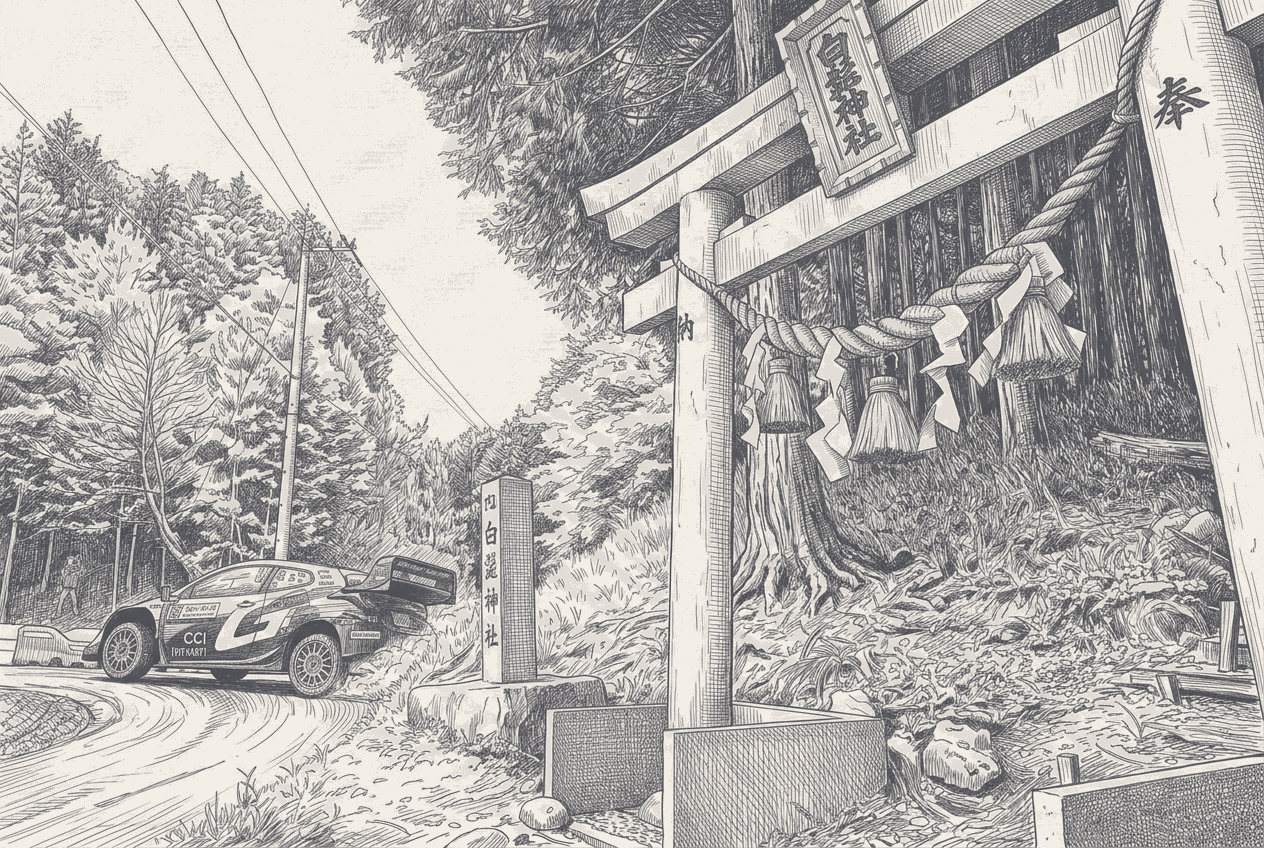
The GR Yaris Rally1 has now won 50 consecutive asphalt special stages across its last three tarmac rallies, a streak that closed at FORUM8 Rally Japan because the car will not contest another tarmac event in this specification. Elfyn Evans and Scott Martin won the rally by 12.8 seconds over Sebastien Ogier, heading a Toyota 1-2-3-4 on home roads. The number that frames the weekend is not the margin. It is the 50, because the regulation that produced it expires at the end of this year.
A home lockout, and a record inside it
Evans led from the second stage on Friday and never gave the lead back, per Toyota Gazoo Racing's Day 3 release, with Sami Pajari third at 51.4 seconds and Takamoto Katsuta fourth to complete the top-four sweep. The win was Evans' second of 2026 and his third at Rally Japan, which makes him the most successful driver in the event's history. It also delivered his 50th career WRC podium, a milestone Autosport noted sits alongside a championship lead he has now stretched to a clear margin at the season's midpoint.
The attrition story belonged to Oliver Solberg, who slid wide on Saturday while fighting for the lead and damaged his rear suspension. He restarted on Sunday and won the rally-ending Power Stage, taking all 10 Super Sunday points from 21st overall, per the Toyota classification. Behind the Toyota train, that result was the only meaningful points swing of the final day.
The arithmetic at the halfway mark
Evans leads the drivers' championship by 20 points, 151 to Katsuta's 131, with seven of the season's 14 rounds run. Toyota's manufacturers' lead has grown to 127 points, 370 against Hyundai's 243, again per the team release. The shape of those numbers matters more than the totals, because the next round changes the surface. The championship turns to gravel at the EKO Acropolis Rally Greece on June 25-28, and Toyota's tarmac dominance does not carry across the boundary the way the standings imply.
That is the quiet caveat inside a 1-2-3-4. The GR Yaris has been close to unbeatable on sealed surfaces, but the second half of the calendar is gravel-weighted, and Hyundai's i20 N has historically been a stronger rough-road car than its asphalt form suggests. A 127-point manufacturers' gap is not a gravel-proof gap.
Why the streak is also a closing date
Rally Japan was the final tarmac outing for the current Rally1 specification, the hybrid-era car introduced in 2022 and stripped of its hybrid unit for 2025. From 2027 the championship moves to a new technical regulation, confirmed by the FIA and detailed since by the technical press. The Rally1 name stays. Almost nothing under it does.
Its 2027 successor drops the bespoke 1.6-litre Rally1 turbo for a Rally2-derived 1.6-litre turbocharged engine producing around 290bhp, paired with a five-speed gearbox, double-wishbone suspension, and Rally2-sourced braking and steering. The aerodynamics simplify. The safety structure becomes an evolved tubular spaceframe cell refined through crash simulation. The hybrid system, already removed, does not return; the regulation commits to sustainably-fuelled internal combustion first, with a written door left open to hybrid or fully-electric solutions later.
Cost is the headline. The 2027 asphalt-spec car carries a 345,000-euro cost cap, more than 50 per cent below current Rally1 levels. That is the lever the FIA is pulling. The current car is fast, safe, and expensive enough that the WRC's manufacturer grid has thinned to three. A car that costs half as much to build on tarmac is an attempt to widen that grid before it narrows further.
The race-to-road read
There is a transfer argument buried in the spec sheet, and it runs in the opposite direction to the one the sport usually tells. The current Rally1 was a hybrid showcase, a tarmac-and-gravel demonstration that a road-relevant electrified powertrain could survive a rally stage. The 2027 car retreats from that. It bets that a sustainably-fuelled combustion engine, sitting on a Rally2 mechanical base, is the more honest representation of where most of the car market still is, and the cheaper platform to homologate while the road industry's own electrification timeline keeps moving.
Toyota's road-car division has spent the hybrid era selling the homologation-special GR Yaris on exactly this lineage. The 2027 reset asks what that lineage is worth once the rally car powering it costs half as much and shares its engine with the customer category below. The streak ended where it was always going to end: not on the stages, but on the regulation calendar.