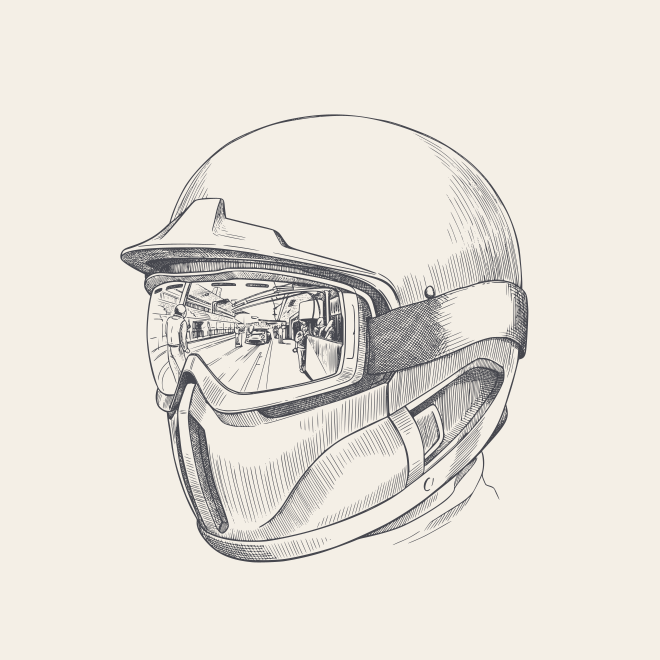
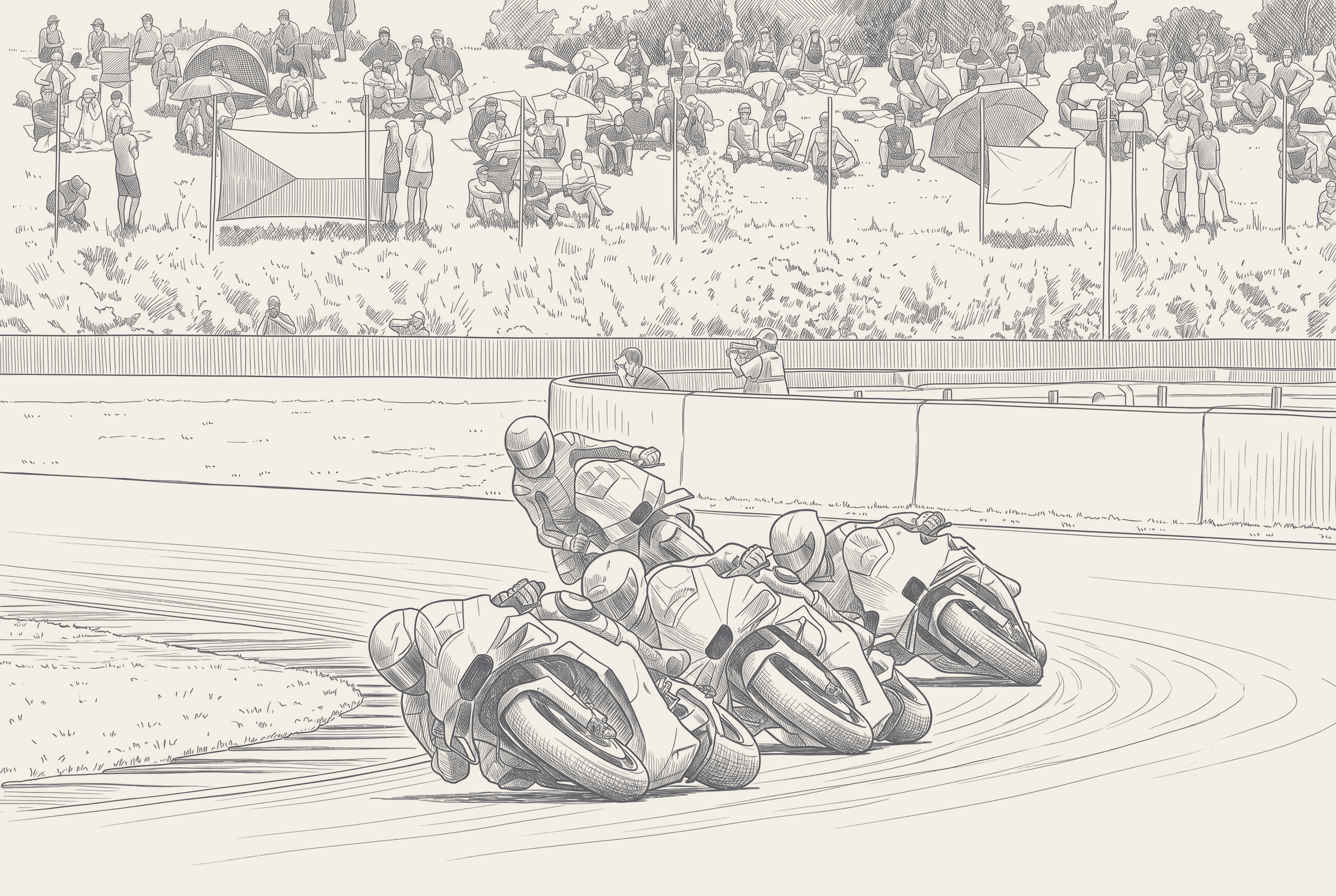
MotoGP's 850cc bike gets its first race-rider laps on Monday at Brno.
MotoGP's 2027 rule book cuts engine capacity from 1000cc to 850cc, narrows the maximum cylinder bore from 81mm to 75mm, outlaws the ride-height and holeshot devices, trims the bodywork, drops the fuel allowance and hands the tyre contract from Michelin to Pirelli, as motogpnews has set out in full. Every one of those changes is written down and homologated. None of them has been felt by a rider who races for championship points, until Monday.
On Monday, June 22, the day after the Czech Grand Prix, a small group of current riders samples the 850cc machinery at Brno for the first time, Crash.net reports. The session runs with no media present and no official timing, and prototype bikes and tyres are scarce enough that most factories will field only two riders. One private day, and then the race riders do not touch the bike again until after the Austrian Grand Prix in September. Whatever comes off Brno on Monday has to carry close to three months of development direction.
A smaller engine, less downforce, no launch aid
Cutting capacity from 1000cc to 850cc takes power out of machines that already make close to 300bhp, and the 75mm bore matters as much as the displacement. A narrower bore lowers the rev ceiling and moves where the power arrives in the range, which is the lever the rule-makers reached for to pull top speeds down without writing a horsepower limit into the regulation, as MotoMatters explained when the rules were published. Slower bikes at the end of the straight was the safety case; a smaller engine was the route to it.
Aerodynamics take a parallel cut. Maximum bodywork width drops from 600mm to 550mm, the nose moves back by 50mm, and the rear height falls from 1250mm to 1150mm, per the published 2027 package. Those are real reductions in surface area on a generation of bikes that had been adding downforce every season. Less wing means less stability under braking and less front load on entry, the precise areas a modern MotoGP rider leans on hardest.
Removing the ride-height and holeshot devices takes away the mechanical launch and the in-corner squat that teams spent years perfecting. Dropping the bike on the straight and through corner exit raised drive and stability; banning it changes how a rider attacks an apex and how the chassis loads under braking. Engineers now have to recover with geometry and weight distribution what a hydraulic actuator used to deliver on command, and MotoMatters has argued the device ban may reshape the bikes more than the engine cut does.
Corner entry is where these changes compound. A bike with less downforce, no ride-height device and a smaller engine brakes differently, turns differently and drives off the apex differently, and it does all three at once, which is why no factory can test the changes in isolation and read them cleanly. The 2027 machine is not the 2026 machine with a smaller motor bolted in. It is a different motorcycle that happens to share a class name.
Fuel falls alongside the rest. The tank shrinks from 22 litres to 20, and the prototypes run on 100% sustainable fuel, a pairing that tightens energy management across a full race and is the clearest line the regulation draws toward a road motorcycle. A smaller-capacity, lower-bore engine burning sustainable fuel is the part of the 2027 package the championship sells as relevant to production bikes rather than purely to the stopwatch, and it is the one race-to-road claim in the rules that rests on named hardware rather than marketing.
The tyre is the variable nobody has ten years of data on
Pirelli replaces Michelin after a decade as MotoGP's control supplier, and that single switch may move the 2027 order more than the engine does. A lap is decided at the contact patch, and a new manufacturer's carcass construction, profile and warm-up behaviour rewrite the setup window every team has spent ten years learning. Pirelli has been preparing the takeover methodically, running its first MotoGP prototypes at Misano in September 2025 and delivering further sets through 2026 as it finalises the compounds it will produce.
Riders carry a decade of Michelin instinct into a tyre that will not reward it. The point at which the front lets go, the way the rear spins up out of a slow corner, the out-lap needed to switch a tyre on, all of it has to be relearned, and the riders who adapt fastest will flatter bikes that may not be the quickest underneath them. A tyre change of this scale scrambles the read on everything else for at least a season, which is the trap waiting inside any early-2027 result.
Making the chassis, the 850cc engine and the Pirelli tyre work together is the harder half of the problem. All three have to combine with less power and less downforce than the current bikes carry, which motorsport.com flagged as the central engineering challenge of the new era. A setup that flatters the new tyre can expose the chassis, and a chassis built around old assumptions can waste the tyre. The factory that aligns all three first owns 2027, and none of them can fully model that alignment until a rider rides it.
What one private day can and cannot show
Brno on Monday gives each factory a first read on rider feel and gross direction, the questions a simulator and a test-team specialist cannot fully answer. Does the 850cc bike turn the way the engineers predicted with the aero stripped back? Where does a race rider lose confidence on a Pirelli front under braking? Those are answerable inside a handful of laps, and they are exactly the answers a winter of factory work needs as its starting point.
Test-team riders have already turned laps on early 850cc mules for several factories, part of the long Pirelli and Michelin testing programme that built up to this season, but a development specialist and a title contender report different things. A race rider feels where the bike costs him lap time at the limit, the information a factory cannot extract from a tester running at eight tenths. That gap is the specific value of Monday, and the reason factories will spend a scarce prototype day putting their best riders on the bike rather than their testers.
A single day cannot deliver race pace, and that is the limit worth stating plainly. With no timing, scarce tyres and two riders per factory, Brno cannot map how a Pirelli degrades over a stint, cannot rank the manufacturers against one another, and cannot tell Ducati whether it is ahead or behind. The day tells a factory where to point its development, not where it will finish in 2027. Confusing the two is how a promising Monday becomes a misread winter.
Ducati runs reigning champion Marc Marquez and Gresini's Fermin Aldeguer, the only two riders it has confirmed will stay on its 2027 bike; Aprilia runs only title leader Marco Bezzecchi; and Honda is sending Joan Mir. The rider-by-rider logic of that list is a market story of its own. The engineering point is narrower and harder: each factory gets one calibrated read from a rider it trusts, and has to extrapolate everything else from it.
The development clock starts frozen
The concessions framework carries into 2027 with every 2026 manufacturer classified as a Rank B marque, as autosport.com has detailed, which means each one opens the new era with a freeze on engine development, three wildcards a season, no in-season testing for race riders and 190 tyres allocated for testing. That freeze is the reason Monday carries so much weight. The chances to run actual race riders on the actual bike are few and spaced far apart by rule, so a single untimed day stops being a luxury and becomes one of the few real inputs a factory gets.
Building two motorcycles at once is the quieter strain underneath all of it. Every factory has to keep developing its 2026 challenger through a live championship while standing up an 850cc programme beside it, a double commitment motorsport.com reports has pushed all five manufacturers to raise spending. The grid is racing one set of rules on Sunday and engineering a different one on Monday, with the same engineers on both.
Monday's running ends by Monday night, and the next time a race rider throws a leg over an 850cc bike is after the Austrian Grand Prix in September. Five factories will spend the months in between building their 2027 around whatever a single untimed afternoon at Brno told them.