Manuel Gonzalez has lost Moto2 points to the lap count twice in 2026, once to the timekeepers and once in the cockpit.
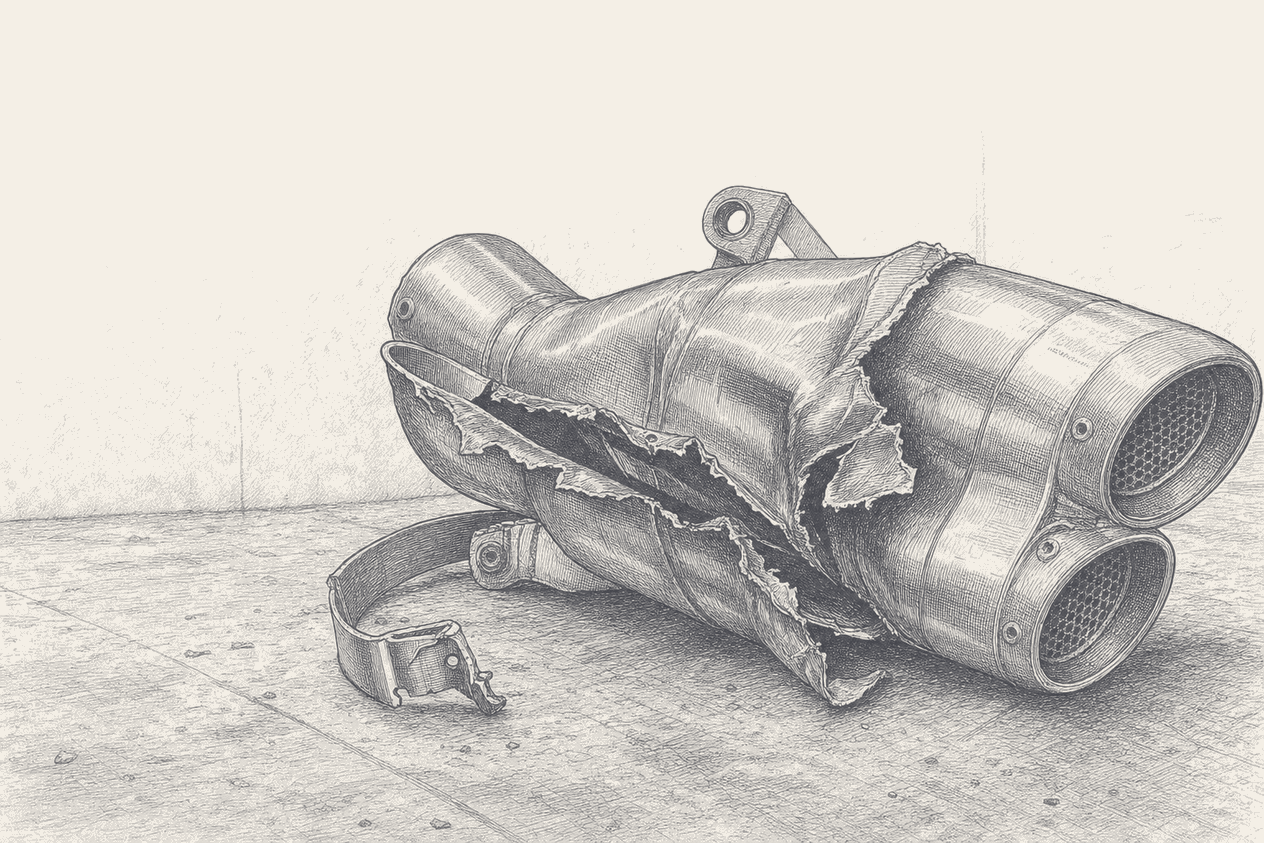
Manuel Gonzalez crossed the line first at the end of the penultimate lap at Silverstone, stood up on the pegs, and finished 14th. The Moto2 championship leader believed the race was already won with a lap still to run, and as motogp.com recorded, Dani Holgado clipped his exhaust taking avoiding action behind the slowing bike and broke it. Gonzalez nursed the machine home for two points instead of the 25 he had led onto the final lap to collect.
Filip Salac inherited the win, his first in a world championship, by 0.303s over Ivan Ortola, with Alex Escrig third for a debut podium. Salac is the first Czech Moto2 winner since Karel Abraham at Valencia in 2010. What is not settled is whose fault the miscount was: reporting from Silverstone left open whether Gonzalez counted the laps wrong himself or the information reaching him from his dashboard or pit board was incorrect. Either way, the racing had not decided the result. The count had.
Gonzalez's Silverstone error was the second time in 2026 that the lap count, rather than the racing, reshaped one of his results. The first came at the opening round in March, and it was not his mistake at all.
Buriram, and a phantom lap
The Thai Grand Prix at Buriram opened the season with two red-flag restarts, the first for a David Alonso crash on lap four, the second on the opening lap of the restart when Sergio Garcia tagged Barry Baltus. The third and final Moto2 start ran to just seven laps, and Gonzalez won it from Izan Guevara and Dani Holgado. Then the timekeepers found a counting error of their own: the single lap completed on the aborted second start had been added to the race distance when it should have been void.
Take that lap back out and the Sunday had produced only ten green-flag Moto2 laps, three plus seven, one short of the 50 percent of scheduled distance the rulebook requires for full points. The race was rescored to half points. Gonzalez's victory paid 12.5 rather than 25, down to half a point for 15th, and the whole field's totals were halved with it. A win still counted as a win; it simply weighed half as much because a lap that never counted had briefly been counted.
Two failures, one of them the series' to fix
The two incidents look alike and are not. Silverstone was a cockpit failure, whether the rider's own count or the signal he was given, and it cost one rider one result. Buriram was the series' own timekeeping, corrected after the flag, and it rewrote an entire race's points under a distance threshold most fans had never heard of. Only one of those is Dorna's and the FIM's to engineer against, and it is the one that turned a clean win into half a win by administrative correction. A championship in which the points a race pays can move after the chequered flag, on a counting error in race control, is carrying a fragility that has nothing to do with who rode fastest.
Silverstone is the more human failure, and the less fixable. Riders have misjudged the last lap since pit boards were the only counter, and Moto2's grid does not run the same driver aids or dashboards as the class above it. The honest reading is that the sport can tighten its own timekeeping and its lap signalling, and can do nothing about a leader who believes, wrongly, that he has already won.
Gonzalez survived both because of who was around him. In Thailand every rival was halved alongside him, so his relative position barely moved. At Silverstone his nearest challenger, Izan Guevara, could finish only fifth, so a swing worth roughly 23 points cost almost none of his margin. He still leads the standings on 197.5 points to Guevara's 155, and the half-point on the end of that total is the fossil of Buriram, still visible five months later. The Moto2 field reconvenes at Aragon on August 30, where a 42.5-point lead means Gonzalez can afford to count conservatively and let the racing decide the rest.