Mercedes holds the top two places in the championship. The harder question is which of its own drivers takes it..
Kimi Antonelli leads the 2026 drivers' championship on 179 points, and George Russell sits second on 154, a gap of 25 on the official classification after the British Grand Prix, as RacingNews365 sets out. The two drivers ahead of the field are the two Mercedes works cars, which makes the headline number the least interesting thing about it. A team leading a championship one and two is not fighting anyone outside its own garage for the top step, at least not yet.
The decisive contest of the season is therefore internal, and it is an awkward one for the team to hold. Antonelli is 19 and defending a title lead in only his second full season; Russell is the established lead driver Mercedes built the cars around, and he is the one 25 points behind. A points gap between team-mates is the hardest kind for a team to manage, because every place one driver takes from the other is scored inside the same operation, and the season's biggest strategic decisions get made between two cars that answer to the same pit wall.
Antonelli built that lead with a run of early-season wins and has since watched it thin. His advantage was larger before Silverstone, where he scored nothing and let Russell close, and team principal Toto Wolff has pointed to reliability rather than form, noting the championship leader has failed to score in two of the last three races through technical faults. A first-time title leader carrying a shrinking margin into the second half is a specific kind of pressure, and it is being applied by his own side of the garage as much as by anyone chasing.
Third and fourth in the table belong to Ferrari, and that is the detail that corrects the tempting shorthand. Lewis Hamilton is third on 147 and Charles Leclerc fourth on 108, Leclerc having won the British Grand Prix to climb clear in fourth. Mercedes also supplies engines to McLaren, Williams and Alpine, so it would be easy to read the top of the order as a Mercedes-power story. It is not. The cars in first and second are the works team's, the cars closing fastest are a rival manufacturer's, and the two Ferraris are the external threat to an otherwise internal fight.
A team whose two cars occupy the top two places has to decide how long it can let them race each other freely. Backing the points leader is the orthodox move, but the points leader is the teenager and the driver behind is the one with the longer record, which turns a routine call into a political one. Mercedes has said nothing to suggest it will intervene, and for now the pace gap is small enough that it does not have to. A single reliability failure for either car, or a Ferrari that keeps taking wins, changes that arithmetic quickly.
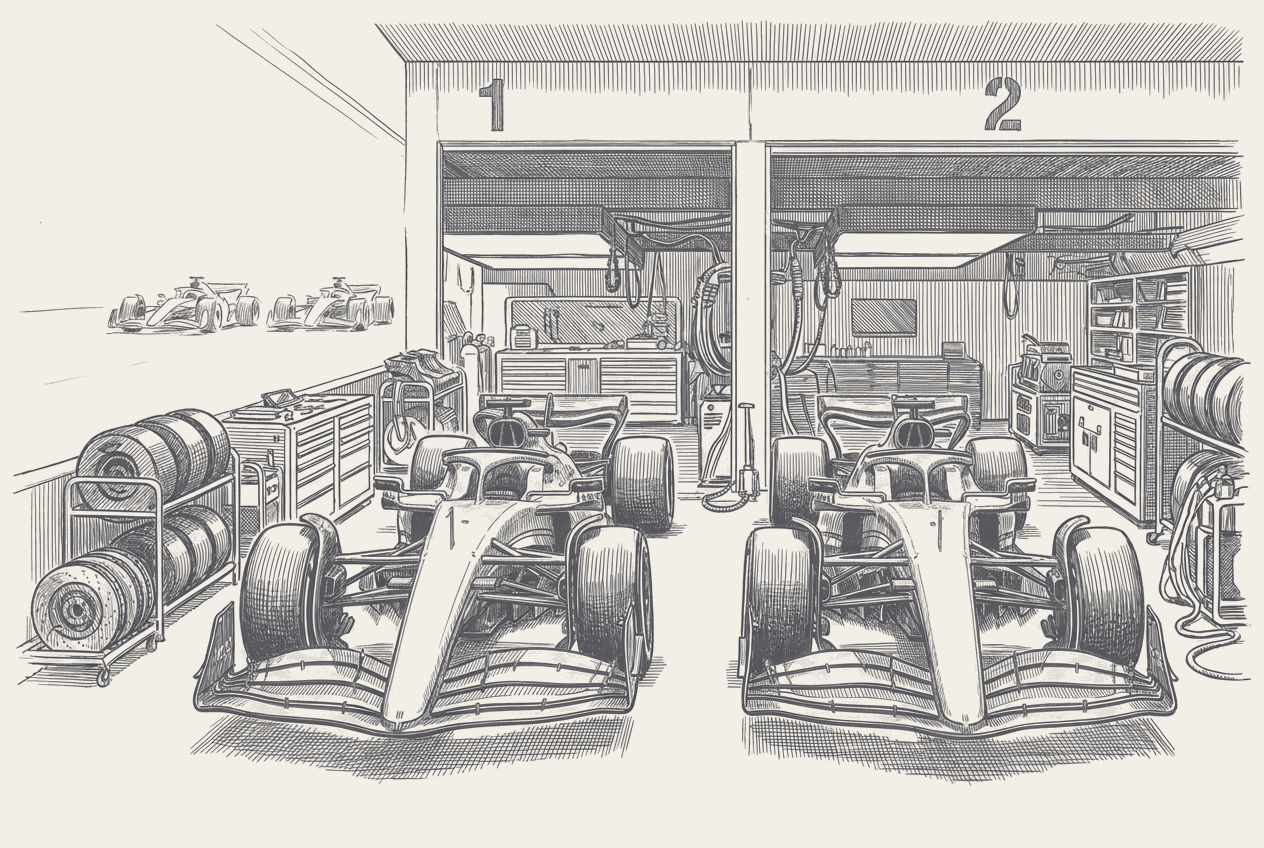
Spa opens a double-header with Hungary that closes the first half of the season, and Wolff has framed both races as a reliability test as much as a competitive one. The Belgian Grand Prix is the next place the internal fight and the Ferrari surge both get a number attached to them. Antonelli's lead is real and it is his to lose, and the most direct way he loses it is to the car in the next bay.