
How the single-safety-car rule decides Le Mans, and handed 2026 to the slower Toyota.
On the average of each car's best 60 percent of laps, the Toyota that won the 2026 Le Mans 24 Hours was only the fourth-fastest car in the race. Motorsport.com's post-race analysis ranked the sister No. 8 Toyota quickest at 3:28.059, the No. 12 Cadillac second at 3:28.294 and the No. 20 BMW third at 3:28.377, with the winning No. 7 fourth at 3:28.392. The car that took the trophy was, on pace, the slowest of the leading four.
The No. 7 of Mike Conway, Kamui Kobayashi and Nyck de Vries won anyway, by 10.913 seconds over the No. 20 BMW, Toyota's sixth Le Mans victory and its first since 2022. It won from the back foot. An early slow puncture dropped the No. 7 off the lead, and by the analysis's account the lost time came back not through pace but through a safety car that bunched the field and zeroed the gap. To read the 2026 result you have to read the rule that did the bunching.
The rule that replaced the safety-car lottery
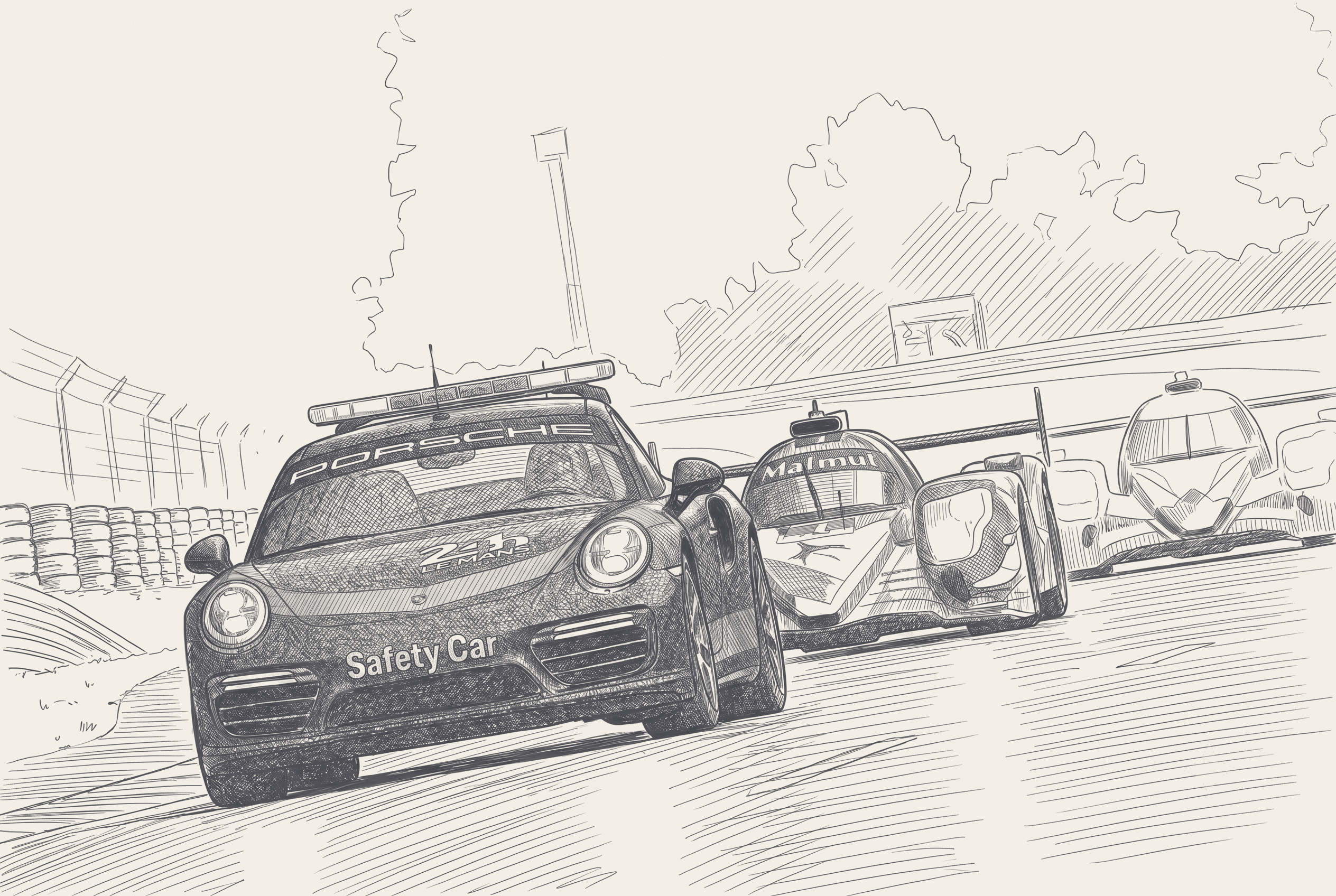
Le Mans rebuilt its safety-car procedure for 2023, and the version that decided this year's race groups the whole field behind a single car. Under the system the ACO introduced, three safety cars deploy at an incident, then two of them peel off and every competitor merges into one queue behind the survivor before the field is re-ordered by class. The effect is blunt. Time gaps between cars collapse toward zero.
Before 2023, Le Mans ran multiple safety cars that split the field into separate trains, and the gaps between those trains could reach two minutes, a quirk that decided the 2018 GTE Pro class when an early caution caught the No. 92 Porsche on the lucky side of a split and handed it a two-minute cushion it held to the flag. Motor Sport Magazine's guide to the procedure sets out how the single-car merge was meant to retire exactly that kind of accident.
Merging a 24-hour field is not instant. The procedure can swallow more than twenty minutes of running, and the ACO has refined it since 2023, scrapping the original drop-back step in a later revision as it tried to balance safety against fairness. One principle survived every tweak. There is one safety car at the front and one bunched field behind it.
The trade-off the merge created
At a 13.6km circuit where a lap takes about three and a half minutes, a single merge can erase a lead it took hours to build. A car running cleanly at the front loses its margin the instant the field groups up, and a car that has fallen behind gets the gap handed straight back, which is the objection drivers raised the first time the rule ran. Bunching retired one lottery and opened another.
Drivers have never agreed on which lottery is fairer. The crews who lose a hard-won lead call the merge merit taken away; the crews handed a second chance call it a fair reset. Three years on, the argument has not resolved, because both descriptions of the same rule are accurate at once.
An early puncture on the No. 7 should have ended its race as a lost-track-position story. The merge gave the time back, and from level the car won by 10.913 seconds, the third-closest finish in Le Mans history behind 1966 and 1969. The pace ranking that put the winner fourth-fastest is the proof of the mechanism. The No. 7 did not drive back to the front; the rule carried it there, and then a strong crew held the lead it was given.
What the rule rewards now
When any lead can evaporate at the next caution, building a margin loses value and holding track position at the restart gains it, so strategy at Le Mans now bends toward staying in contention rather than escaping up the road. A crew that opens a two-minute lead can watch it close to nothing at a single merge, which rewards patience over early aggression. The No. 8's pace-leading run to a third-place finish is the same calculus read from the other side of the garage.
WEC resumes at Sao Paulo over July 10 to 12, on a regulation that already hides each car's true pace behind a confidential Balance of Performance. The single-safety-car rule hides it once more at the one race that counts double. The 0.333 seconds of lap time that separated the fastest car from the winner in 2026 is not a fluke of one edition; it is the kind of outcome the merge makes ordinary.