Le Mans starts with the fastest car tenth, a first-time polesitter, and a timing-software grievance.
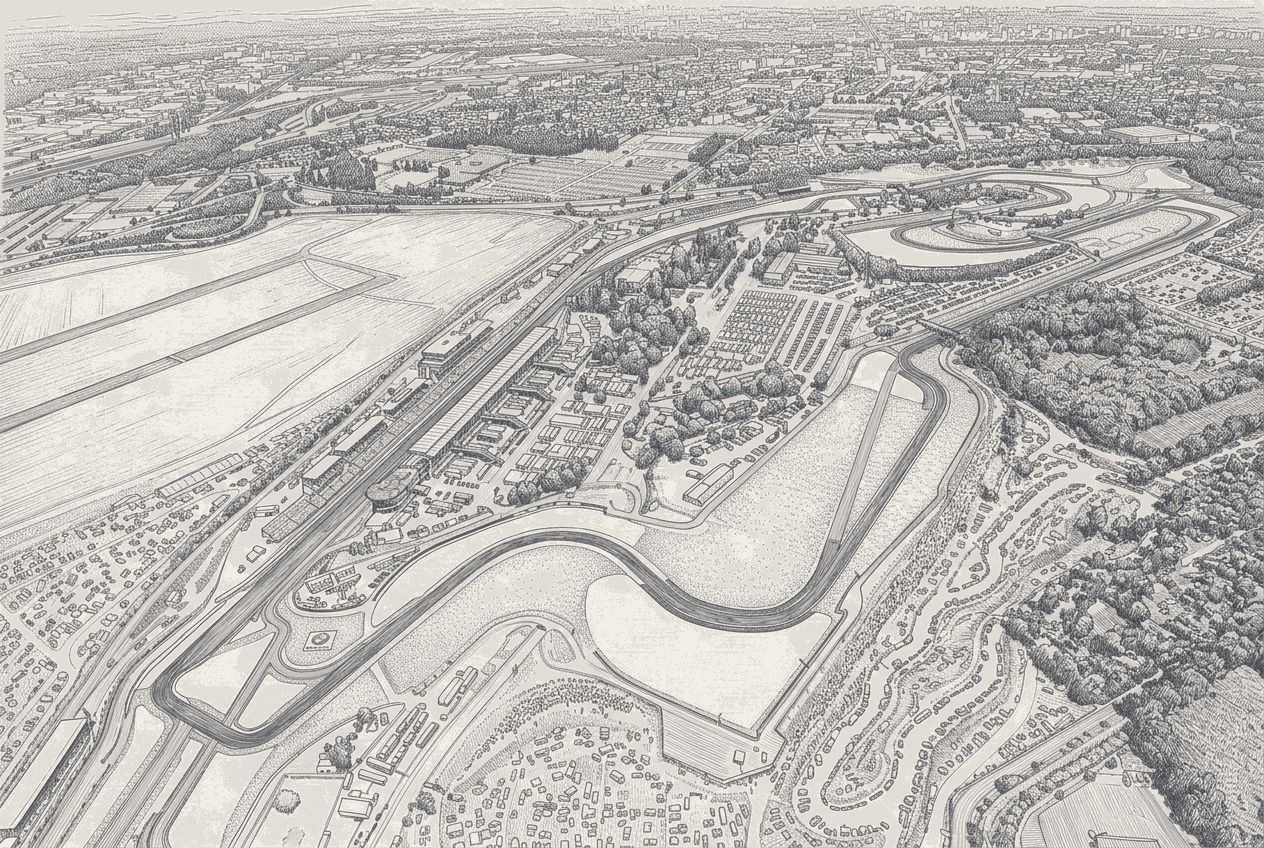
At 16:00 on Saturday, 62 cars take the start of the 94th 24 Hours of Le Mans, per the official programme, and the grid they start from was decided by 0.005 seconds and one minute of pit lane procedure. Jack Aitken's 3:22.559 in the #38 Cadillac was the fastest lap anyone turned all week over the 13.6km of the Circuit de la Sarthe. It will start tenth.
The pole that moved twice
Aitken's lap was deleted because the #38 left its pit stall four minutes before Hyperpole 2 began, when the race director's instruction allowed cars into the fast lane at three minutes, Motorsport.com reported from the stewards' bulletin. Jota team principal Dieter Gass disputed the basis rather than the fact: "The software we and the rest of the paddock uses was clearly wrong. It is linked to race control's timing, so how it could be wrong, we don't know." His driver, Gass added, gained "zero advantage" from the early release because he pitted at the end of his out-lap anyway. The deletion promoted Dries Vanthoor's 3:22.564 in the #15 BMW M Hybrid V8, shared with Kevin Magnussen and Raffaele Marciello, to BMW's first Hypercar-era pole at Le Mans, with Will Stevens promoted to second in the #12 Cadillac. A team adamant it was punished by faulty official timing is, remarkably, the second such story in motorsport this week; F1 spent Friday morning unwinding Pierre Gasly's Monaco penalties after FOM conceded its pit lane distance was wrong.
The recovery drives
Tenth at Le Mans is not a sentence, and the #38 spent Friday making that point: the demoted Cadillac topped final free practice, per the ACO's report. Seventeen places behind its grid slot's implied pace sits the heavier recovery case: the defending-winner #83 Ferrari of Robert Kubica, Yifei Ye and Phil Hanson missed the Hyperpole cut outright and starts 17th, carrying Ferrari's bid for a fourth consecutive win from the deepest grid position of the streak's four years. The factory Ferraris bring the same problem in milder form, the #51 starting eighth as the marque's best, and both Toyotas line up 14th and 15th after falling in Hyperpole 1. Every one of those cars has 24 hours to fix what one lap decided; the history of this race says most of them will spend Sunday morning somewhere near the front anyway.
The debutants
Genesis qualified its two GMR-001s sixth and ninth on the marque's first Le Mans, the strongest debut grid slots of this year's field, with Jamie Chadwick standing reserve after her Test Day laps. One class down, Doriane Pin's #30 Duqueine Oreca anchors an LMP2 field whose pole also moved after the session: the #29 Forestier by Panis car that qualified fastest was demoted one place for impeding, handing the class lead-off to the #19 IDEC Sport Oreca, per Motorsport.com's grid rundown, and Jack Doohan's #24 Nielsen entry qualified third in class. In LMGT3, Mattia Drudi's 3:52.433, the only lap under 3:53, put the #27 Heart of Racing Aston Martin on class pole.
How to read the race
No car has separated itself this week, and the timesheets say so in unusually plain terms: the top 15 Hypercars covered by under a second in Wednesday qualifying, per Pit Debrief's full classification, and pole decided by five thousandths. Each session has crowned someone different. Ferdinand Habsburg's Alpine, which starts third, went fastest on Wednesday at 3:23.135, under last year's pole time; Kamui Kobayashi put the #7 Toyota on top of the first night session; Cadillac headed FP4 and final practice; BMW owns the pole. Five manufacturers have led a timing screen since Wednesday, which is as close as a stopwatch comes to declaring the field even. The 2026 Balance of Performance table remains unpublished under the blackout policy the championship adopted this season, so the paddock goes into the race without the usual paper argument about who is hiding what. Watch three clocks: the first hour, where a BMW that has never led a Le Mans from pole learns what clean air costs; midnight, by which point the #38 and the #83 will have either cycled forward or proven the grid honest; and Sunday's final hour, which last year belonged to the #83 and which 17 other crews have spent a year replaying.
The race runs 16:00 Saturday to 16:00 Sunday. Whatever it produces, the week has already settled one thing: the 2026 field's parity is real, measured five thousandths wide, and the first 24-hour audit of it starts on schedule.