IMSA doubled Road America to six hours. The first running finished behind its ninth safety car..
Road America ran for six hours on August 2, more than doubling the two-hour, forty-minute race IMSA had held there every year since 2015. The venue became the fourth of five rounds in the Michelin Endurance Cup, swapping calendar places with Indianapolis, which drops to the shorter sprint distance Road America used to run. It was the first long-distance IMSA race at the Wisconsin circuit in recent memory, and IMSA had framed the extension around the track's own endurance past, pointing back to the six-hour Road America enduro first run in 1956, seventy years ago.
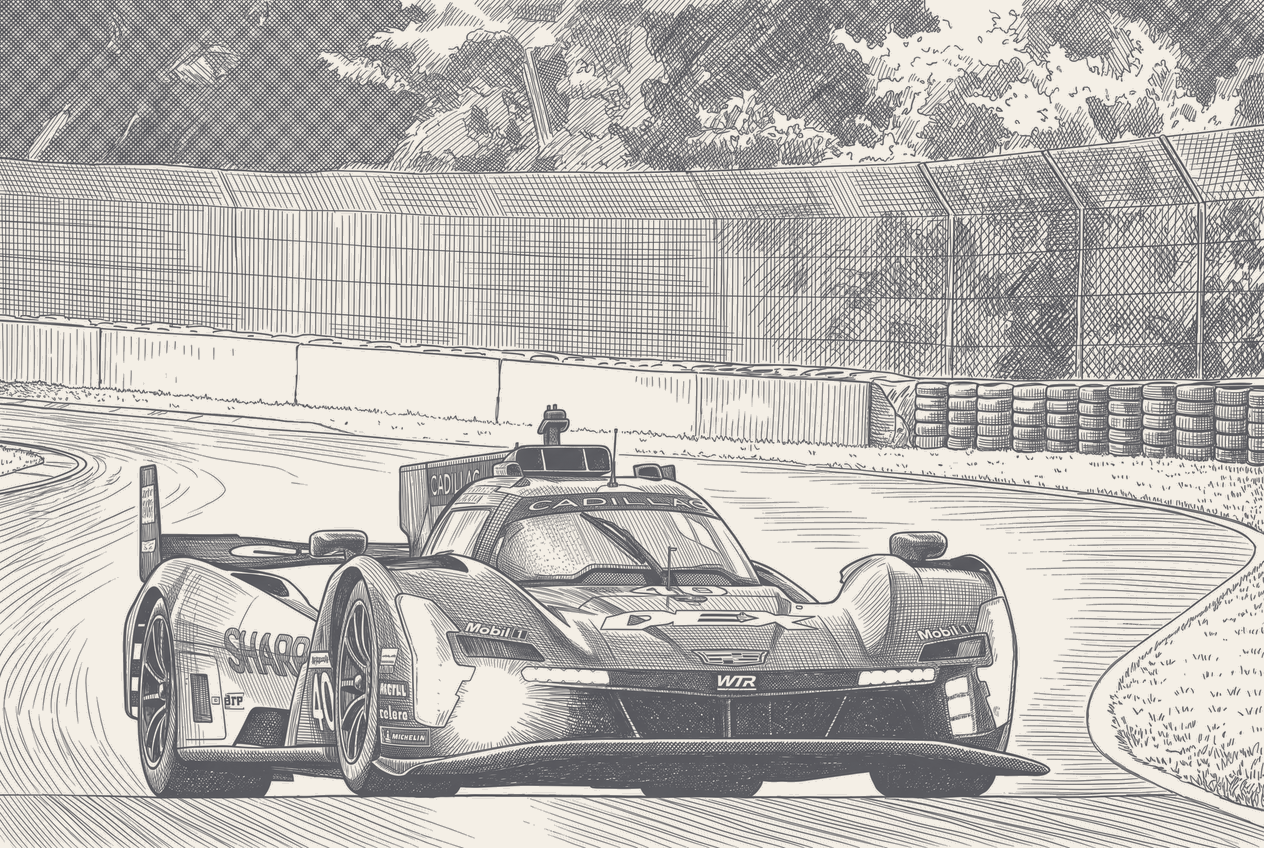
Nine full-course cautions later, the race finished behind its ninth safety car. With about ten minutes left, Kevin Estre's No. 6 Porsche Penske 963 and points leader Jack Aitken's No. 31 Cadillac collided into Turn 1 while fighting for second, both cars into the tyre barriers, and the race never went green again. The No. 10 Wayne Taylor Racing Cadillac of Ricky Taylor and Filipe Albuquerque inherited the win under yellow. The crash also cut Aitken's championship lead from 203 points to 128, which was the day's largest swing and none of it happened at racing speed.
What the Endurance Cup asks
The Michelin Endurance Cup's other four rounds are the Rolex 24 at Daytona, the Twelve Hours of Sebring, the Six Hours of the Glen and Petit Le Mans. Each one is defined by a specific stress that a normal race weekend does not impose: Daytona adds darkness and a full night, Sebring adds a concrete-and-patch surface that breaks cars over twelve hours, Petit Le Mans adds ten hours of traffic management. The stress is the point. That is what a car and a crew are being asked to survive, and it is why the finishing order in those races tends to reward reliability and pit execution over one-lap pace.
Road America now sits in that group at six hours, and the question is what six hours here actually asks. The circuit is 4.048 miles of fast, committed corners with only a handful of genuine passing zones. Doubling the clock at a track like that does not add the surface punishment of Sebring or the night stint of Daytona. It adds green-flag laps in close company, which is a different variable. Length and attrition are not the same thing, and a calendar can extend one without generating the other.
The result the format produced
Cadillac carried a 21-kilogram minimum-weight increase into the weekend, a Balance of Performance adjustment aimed at the championship-leading marque, and a Cadillac still won. That is the tell. The six hours did not sort the field by who could nurse a car to the flag; the winner was decided by which safety car it happened to be running behind when the race ended. A reliability grind produces a different kind of result, one where the leaders at the finish are the ones who lost the least over a long green run. This race produced the opposite: the order at the flag was a snapshot of the last caution, not a summary of six hours of wear.
IMSA's driving standards were in the spotlight by Sunday night, with the Estre and Aitken clash the headline but far from the only contact. NBC Sports counted nine cautions and a few dozen penalties across the afternoon, many for rough driving. The fair reading is not that the format caused the contact; drivers make those decisions at any distance. The format extended the window in which those decisions get made, on a circuit whose character already rewards sitting close and punishes the attempt to get past.
Cautions also eat the very thing the longer race is supposed to sell. Six hours advertised as endurance delivered a large share of its distance under yellow, because nine full-course interruptions on a caution-prone circuit convert green racing time into pace-car laps. The clock read six hours; the green-flag content that actually tests a car and a crew read shorter. On a track that reliably produces cautions, buying more hours does not buy proportionally more racing, and the gap between the two is the length-versus-attrition problem in miniature.
The counter-case is real and IMSA has made it. A six-hour Road America restores an endurance tradition the venue genuinely holds, gives the Endurance Cup a fifth-plus round of scale, and hands the manufacturers another long race worth pit-crew and strategy investment. Fifty-four entries showed up for it. None of that is diminished by one chaotic running. But the case rests on treating "endurance" as a category defined by duration, when the four established rounds earn the label from the specific thing each circuit does to a car over time. Road America's specific thing is traffic and closing speed, and six hours gave the field more of both.
Petit Le Mans closes the Endurance Cup on October 3, with the GT-only VIR round next on the calendar on August 23. If the six-hour format stays on the calendar, its second running arrives in 2027, and the sample of one gets a second data point on the same fast, narrow ground.