77 centimetres rewrote the Monaco podium five days after the flag.
On Friday morning, five days after the chequered flag in Monte Carlo, the FIA confirmed that Pierre Gasly's two five-second penalties were rescinded and his third place restored. The cause is recorded in the stewards' decision document, published in full by Motorsport.com: the distance used to calculate pit lane speed in Monaco's first timing zone was 2692 centimetres, and post-event LIDAR scans by Formula One Management, the sport's official timekeeper, found the shortest path between the same two loops measured 2615. The official timing of a world championship race was computed on a line 77 centimetres longer than the one the cars could drive.
Gasly's recorded crossing times were 1.604 and 1.602 seconds, and the stewards ran the corrected arithmetic in their own document. Pit lane speed in F1 is an average (measured distance between two timing loops, divided by measured time), so a car averaging exactly the 60km/h Monaco limit would cover 2673 and 2670 centimetres in those times, both short of the 2692 the system assumed. On the corrected distance, the timekeeper's table puts Car 10 at 58.7 and 58.8km/h against the reported 60.1 and 60.4. The stewards' conclusion is one sentence long: asked whether Car 10 exceeded the 60km/h limit, "We determine that it did not."
Sunday's race had offered a warning. Six speeding reports reached the stewards, and the first five, covering Hamilton, Russell, Colapinto, Gasly and Piastri, all read exactly 60.1km/h. The document records that the stewards found the pattern unusual enough to query Race Control after the third report; Race Control checked with the timekeepers and relayed back that there was no issue. Every alleged breach, the stewards learned only on June 10, had occurred in the same zone, the first pair of loops after pit entry. The reassurance stood as the final classification for five days.
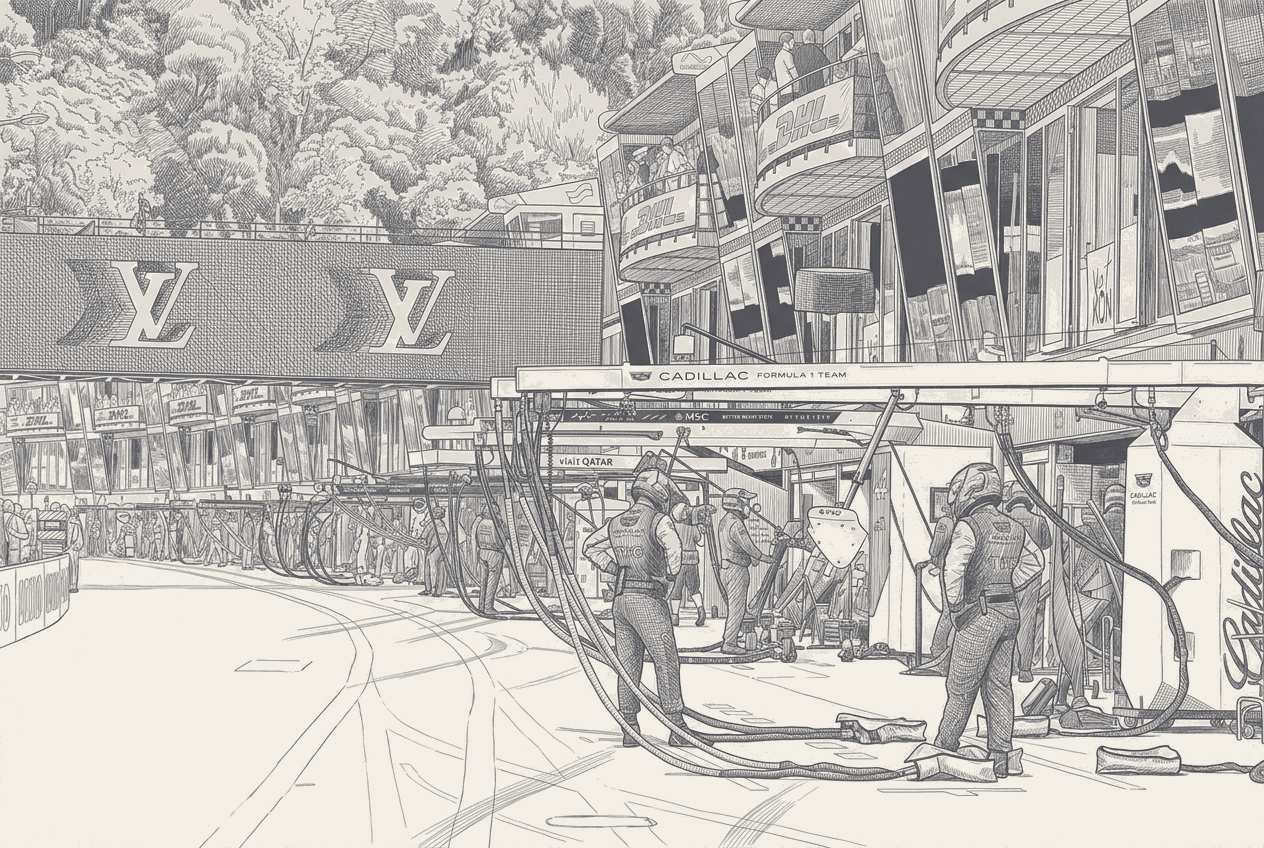
The barriers at Monaco's pit entry changed between 2025 and 2026, the document records, possibly opening a shorter trajectory through the first zone than previous seasons allowed, while the timekeeper applied the same survey procedure it had used at Monaco for years. Nikolas Tombazis, the FIA's single-seater director, told the hearing the established method "may have been insufficient for this particular Grand Prix pit lane layout." Nothing in the process was new. The pit lane was.
Alpine filed its petitions after the race, and the process then ran inside one news cycle: Part 1 of the hearing opened at 13:00 CEST on Thursday, the day before FP1 in Barcelona, and ruled both petitions admissible on the strength of FOM's June 10 disclosure; Part 2 reconvened twenty minutes later, and the decision published Friday morning with the Barcelona weekend already running.
Eight rival teams attended the hearing as observers, and three argued against relief. Red Bull submitted that the timing was consistent all weekend and that teams calibrate to the process in place; McLaren called discrepancies in pit speed calculation a known risk that teams coach their drivers to manage; Racing Bulls questioned the 0.1-metre resolution of the trundle wheel Alpine used for its own post-race measurements. The stewards partly agreed, setting Alpine's measurements and telemetry aside for tolerance error, then ruling anyway, because the decisive evidence was the timekeeper's own report. FOM measured its error itself, by LIDAR, and submitted it.
Article B1.6.3a defines a speed limit with no caveat that the limit is whatever the Official Timekeeping System computes, the stewards noted, contrasting it with the false-start rule, which names its measurement method explicitly. A timing system report, in other words, is evidence of speeding rather than the definition of it. The panel graded its conclusion against the FIA's "comfortable satisfaction" standard and added that the evidence "approaches that of beyond reasonable doubt."
Drivers who served their penalties in race time, Russell's drive-through among them, altered their races in ways no recalculation can reverse, and the stewards record that no regulation gives them power to undo a served penalty. No other team petitioned within the review window. So Gasly's nine extra points flow to him and to Alpine in both championships, whose thanks to the FIA and FOM for transparency Autosport reported, while Isack Hadjar, who stood on the Monaco podium on Sunday, drops to fourth by document and Oscar Piastri to fifth. Alpine's two review deposits come back; everyone else's race stays run.
By Friday afternoon the rewritten classification was itself under challenge. McLaren and Red Bull, the two teams whose drivers lost places to the reinstatement, served notice of appeal at 14:35 BST, RaceFans reported, sending a result already rewritten once toward the FIA's appeal machinery. Both teams had argued in the hearing that the timing process, however imperfect, was the process everyone calibrated to; the appeal gives that argument a second room.
Alpine cleared the right of review's "significant and relevant new element" bar with evidence the timekeeping supplier produced against itself, and the stewards have now established that a surveyed distance can be wrong in a way that voids penalties days after a classification is declared final. Every circuit that moves a barrier between seasons now carries the Monaco question, and the next team shown a 60.1 on the timing screen knows exactly which document to file. Whether Friday's correction itself survives is already its own case: by mid-afternoon, McLaren and Red Bull had served notice of appeal against the stewards' decision, McLaren's Oscar Piastri having dropped from fourth to fifth by the same document that demoted Hadjar.