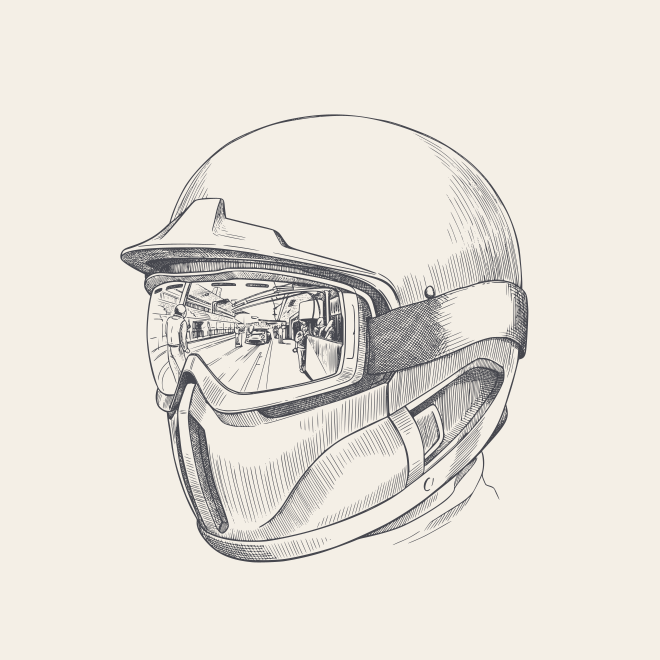
Formula E races Tokyo under lights this weekend, and the street series finally gets the postcard it was built for.
On July 25 and 26, Formula E races at night in Japan for the first time, both rounds of the Tokyo double-header starting at 20:05 local on a temporary street circuit around Tokyo Big Sight, per the series' own preview. A championship built on the promise of racing in the middle of big cities is about to get the image it was designed to produce.
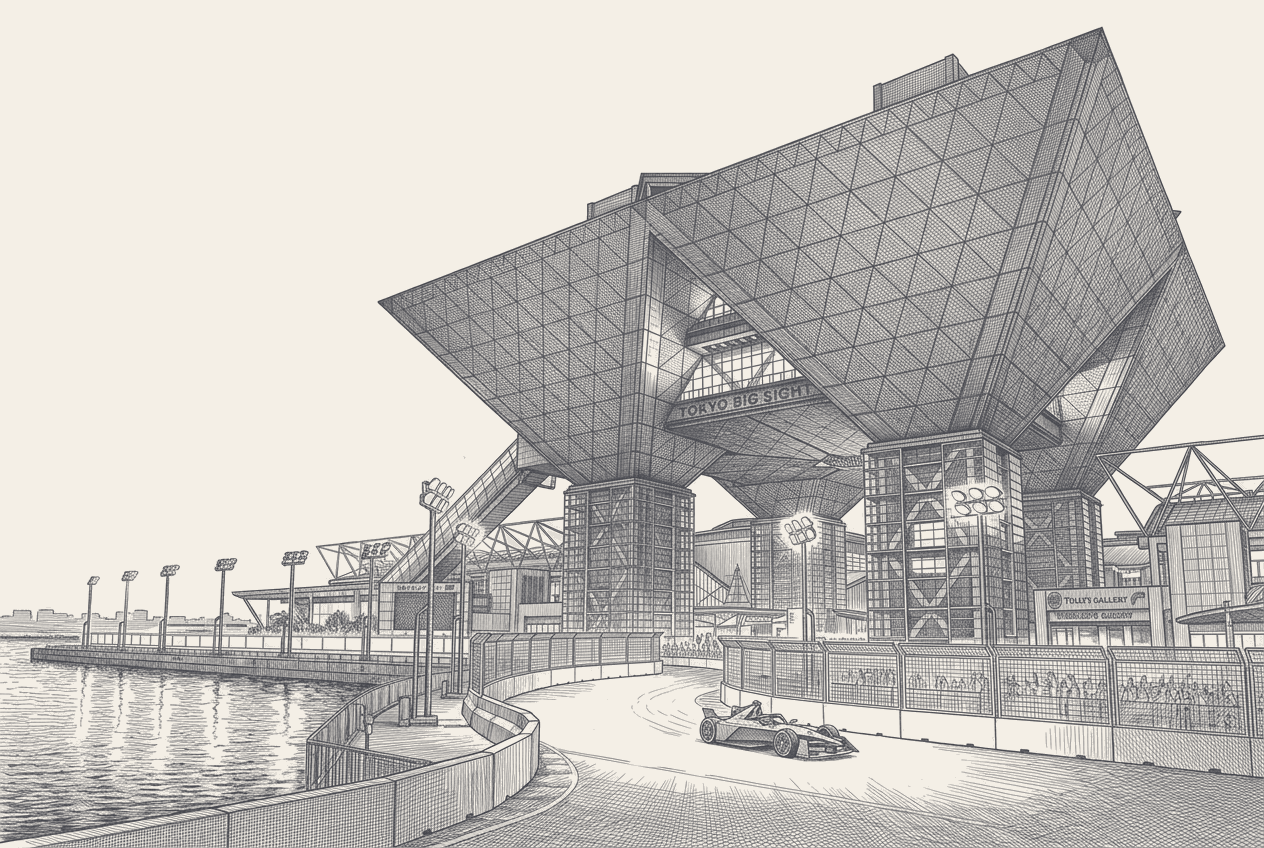
Formula E's founding pitch, since its 2014 debut in Beijing, was the city centre. It put cars on closed streets in Paris, Rome, Berlin, New York and Hong Kong, in places conventional racing never reaches, and the trade was always the same: daylight and tight, low-speed layouts in exchange for a skyline within touching distance of the barriers. The Tokyo slot pays off the second half of that bargain at a scale the series has rarely managed, an 18-turn, 2.575km anti-clockwise lap threading a convention complex on Tokyo Bay, run after dark.
Night racing here is a deliberate production, not a scheduling accident. The Race sets out how the Tokyo E-Prix became an evening event, staged in coordination with the Tokyo Metropolitan Government, with both races of the double-header moved to a 20:05 start specifically to put the cars under lights against the city. A series that has spent eleven seasons arguing it belongs in the urban core finally has the setting that makes the argument for it, without a word of explanation needed.
Teams have read the assignment. Andretti is running a Liberty Walk collaboration livery and special race suits for the weekend, a car dressed to be photographed under floodlights rather than to fade into a midday grandstand shot. Nissan arrives as the home manufacturer, Oliver Rowland and Norman Nato racing in front of a domestic crowd at the marque's home round, which is its own kind of set-piece.
The weekend is staged as much like a street fair as a race. Formula E frames Tokyo as equal parts race weekend and public event, with food, live music and EV-technology exhibits running alongside the circuit through the day. That is the identity the series has always claimed, the grand prix as a thing a city does to itself for a weekend.
Underneath the postcard, the racing carries real stakes. Tokyo opens the run-in to the title, with four rounds left across the Tokyo and London double-headers, and the preview calls it "crunch time" for a championship still live. A night double-header is two race-day results banked in 24 hours, which compresses the run to the finish and puts more of the season on one weekend than a single round usually holds.
Not every ePrix gets a night slot, a convention-centre backdrop and a manufacturer's home race stacked into one weekend. Formula E and the city built Tokyo as a set-piece because it is where two things the series needs meet at once, a genuine city-centre stage and a major electric-vehicle market to put its cars in front of. The choice is commercial, not sentimental.
The lights come on at 20:05 on Saturday. For a series that has spent more than a decade promising the city at its most cinematic and mostly delivering it at noon, Tokyo after dark is the picture it always said it would take.