One badge, two paddocks. Cadillac led 143 of 182 laps at Watkins Glen and burned both its F1 cars to the ground in Austria, on the same Sunday..
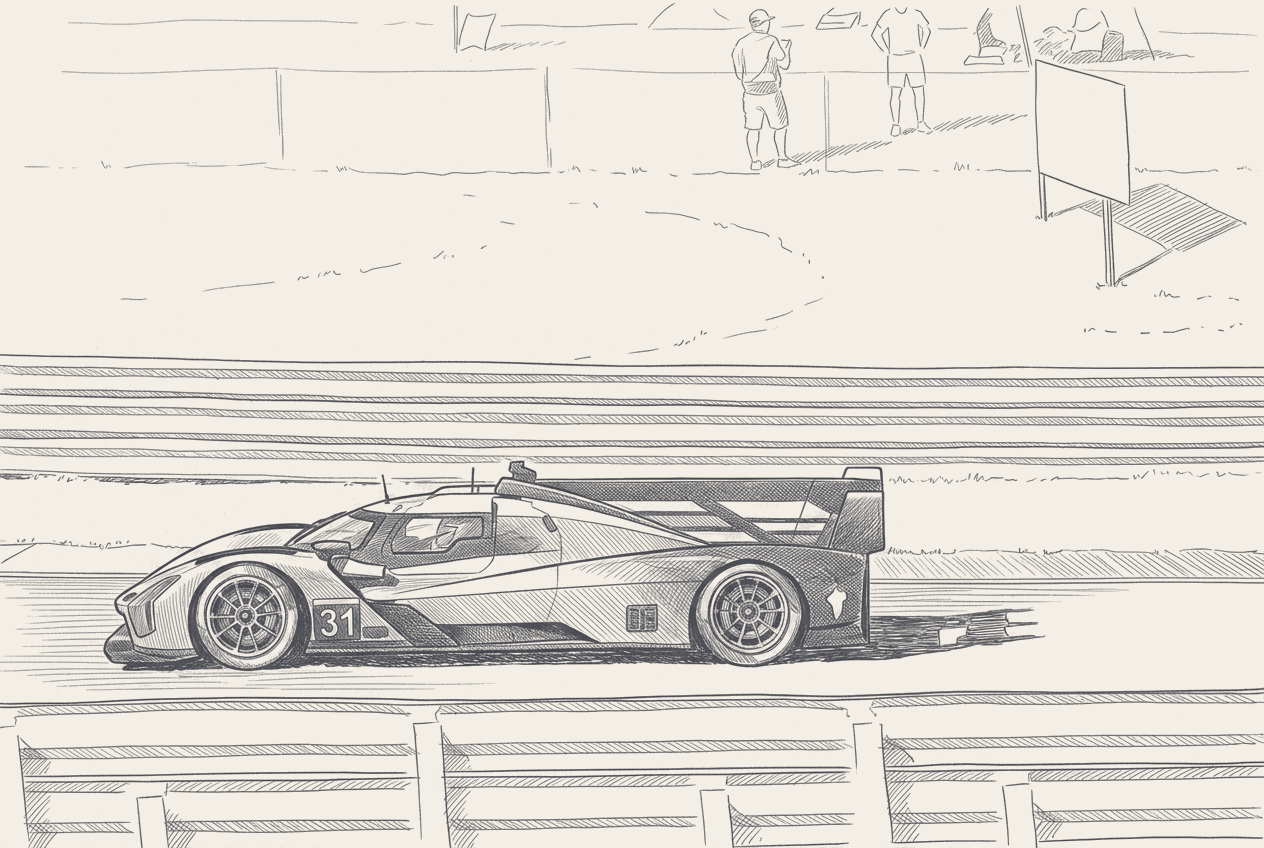
The No. 31 Cadillac led 143 of its 182 laps at Watkins Glen on Sunday and won the Six Hours of The Glen from pole. Four thousand miles east, both Cadillac Formula 1 cars were out within five laps of the Austrian Grand Prix with their brakes on fire. One marque entered two of the weekend's biggest sportscar and grand-prix fields, and the same Sunday delivered its best result and its first double retirement at once.
General Motors is the common owner, Cadillac the common badge, and the contrast is the story: a sportscar operation that has reached the point of winning by execution, and a Formula 1 team still learning to reach the finish. The two programmes share a name and a corporate parent. They do not share a calendar position on the competitiveness curve.
The sportscar programme wins on execution now
Jack Aitken, Earl Bamber and Frederik Vesti converted the Motul Pole Award into a lights-to-flag control of the race, leading 143 of 182 laps and beating the No. 93 Acura on the final pit sequence for the No. 31 Cadillac Whelen entry's second straight WeatherTech win. The crew also swept the Michelin Endurance Cup race points, the bonus tranche awarded at the four-, eight- and finish-line marks, which is what a team collects when it leads from the front and never cedes the position.
Nine full-course cautions punctuated the six hours, the kind of race that scrambles strategy and hands wins to whoever gambles best on a restart. The No. 31 did not gamble. It led, held track position through every neutralisation, and won on a clean stop, the eighth consecutive GTP podium for the same car. That is the signature of a finished operation: not a single fast lap, but a six-hour result delivered without a mistake across pit wall, pit lane and three drivers.
Cadillac's depth showed below the headline result too. Manthey took GTD with the No. 912 Porsche and Vasser Sullivan's No. 14 Lexus won GTD Pro from pole, its first class win since 2024 Sebring, but the GTP victory is the one that matters to the brand on the nose of the car. Cadillac has run prototypes at the front of American sportscar racing since the DPi era and into the current GTP rules, and the Watkins Glen win is what that decade of continuity buys: a programme that treats winning as the baseline.
The Formula 1 programme is still learning to finish
Valtteri Bottas brought his Cadillac into the pit lane after two laps of the Austrian Grand Prix, the brakes on fire and the crew reaching for extinguishers. Sergio Perez lasted to lap five before reporting smoke in the cockpit and retiring, leaving Cadillac with its first Formula 1 double retirement. The Red Bull Ring ran at around 34C air temperature with the track far hotter, and the brake cooling on the MAC-26 could not cope.
Heat broke the younger programme. The same high-summer temperature that overheated Ferrari's rear tyres a few garages away cooked Cadillac's brakes to failure, and a rookie team brought a car whose cooling margin disappeared under the load. Cadillac had arrived in Austria with an upgrade package, which makes the double retirement sting more, not less: the update could not run long enough to be measured.
The drivers said the obvious afterward. Perez and Bottas both reflected that "we cannot have these sort of issues," the line of a team that knows reliability, not pace, is the first thing a new constructor has to solve. Cadillac entered Formula 1 in 2026 as the grid's eleventh team, the first all-new constructor in years, and a brake fire five laps into a race is the texture of a first season, not an indictment of the project. It is the cost of building a Formula 1 team from scratch while the sportscar arm makes winning look routine.
What the split is worth to General Motors
Two motorsport bets, one badge, and very different jobs. The sportscar programme exists to win, and on Sunday it did, the way a mature factory operation is supposed to. The Formula 1 programme exists to plant General Motors on the sport's largest stage and, eventually, to run a Cadillac-branded power unit, a payoff years out and worth the visible early pain. The brand carries both, which means a casual fan saw Cadillac win a six-hour classic and burn two cars to the ground inside the same news cycle.
That is not a brand problem so much as a portfolio in two time zones of development. The sportscar arm is proof that General Motors can build and run a winning factory team, banked credibility the Formula 1 project gets to draw on while it struggles. The harder question is the reverse pull: a grand-prix programme that retires inside five laps is the version of Cadillac that the largest audience sees, and the one that takes longest to fix.
Cadillac's Formula 1 cars run again at Silverstone on July 5, where cooler British conditions should spare the brakes the Austrian test. IMSA resumes later in the summer with the No. 31 holding an eighth straight podium and a points lead built on exactly the reliability the F1 team is still chasing. The same badge will keep carrying both, and for now the older programme is the one teaching the lesson.