Alonso says the 2026 car overtakes with "no driver talent," just a stronger power unit and one button; Spa is where his claim gets tested..
Fernando Alonso, who has raced in Formula 1 since 2001, said after the British Grand Prix that the 2026 car needs "no driver talent" to overtake, because a driver on a stronger power unit will "just press one button, and you overtake" without outbraking anyone or taking a risk. He said he had watched exactly that racing "on full show" in the Silverstone sprint. It is the sharpest verdict a current driver has passed on the new formula, and it reframes a debate that has been about lap time into one about craft.
The specific he leaned on is the one worth holding onto. Alonso said the 2026 cars, with deployment cut through a long middle sector, run "significantly less power than last year and less power than F2," and named Spa next week as where that bites. That is not a mood; it is a measurable claim about a real circuit, and it turns his complaint from the usual veteran grumble into something the Belgian Grand Prix can actually test. When a driver tells you where his argument will be proved, the honest thing is to go and check.
What "one button" is describing
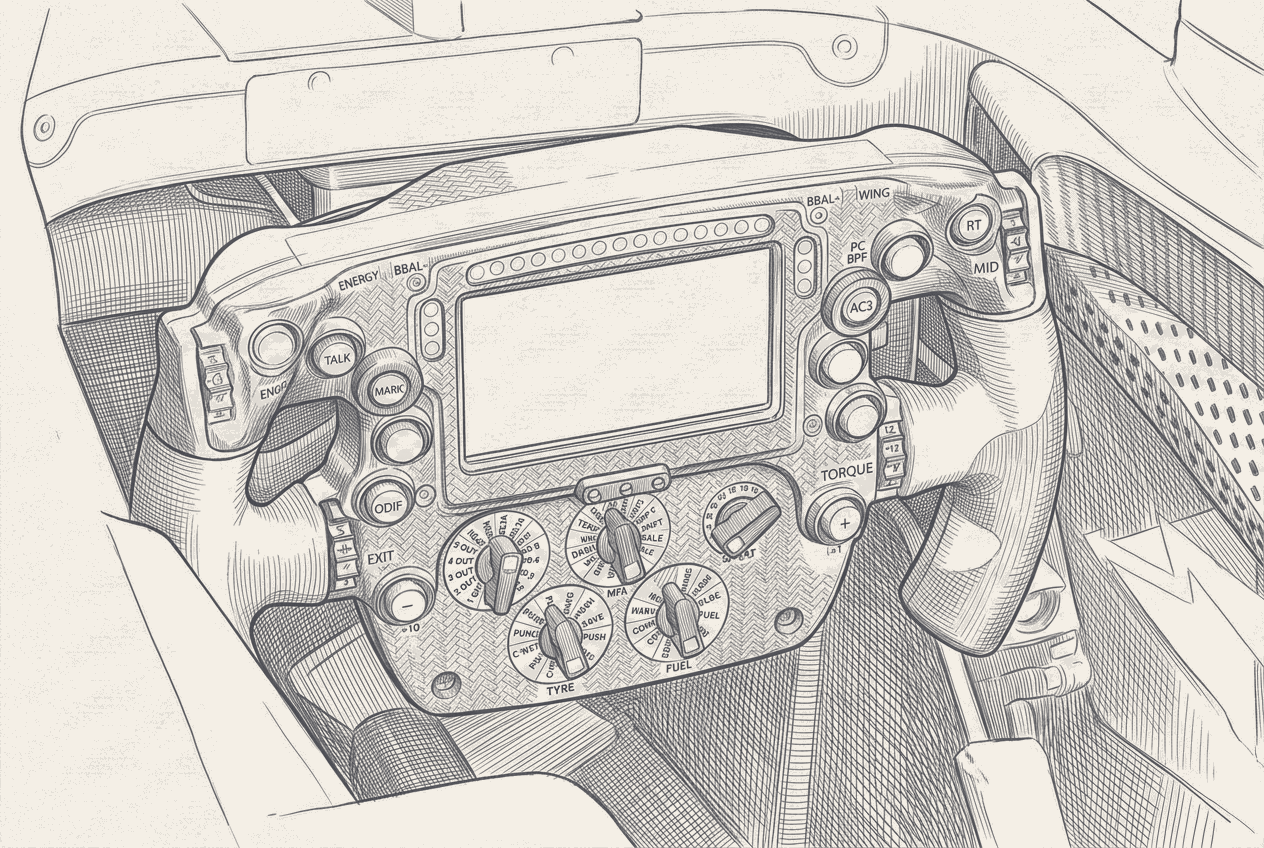
A real mechanism sits behind the jibe, and understanding it is the difference between agreeing with Alonso and merely enjoying him. The 2026 power unit splits its output far more evenly between the internal-combustion engine and a much larger electrical deployment, with the MGU-K roughly tripled to 350kW, and the energy store empties and refills across a lap rather than sitting in reserve. On a long straight, a car that has managed its harvesting arrives with deployment to spend while the car ahead has run dry, and the pass follows from that arithmetic more than from a late lunge into a braking zone. Fans have already named the effect: yo-yo overtaking, a move that happens because one battery is fuller than another.
Alonso's contempt is aimed at that transaction. The romance of overtaking, in his telling, is the risk, the driver who commits to the outside line and makes it stick, and a pass that arrives because your energy budget was healthier and you pressed the deploy button removes the part he values. He is not wrong that the craft has shifted. Whether it has vanished is the harder question, and it is where his line goes further than the evidence strictly allows.
The counter-case he skips past
Managing the energy is itself a skill, and it is not a trivial one. The driver who arrives on the straight with deployment in hand did something across the preceding sector to earn it, lifting and coasting in the right places, protecting the store when a rival spent it, timing the harvest so the battery is full where it matters. That work is invisible from a grandstand in a way that a late-braking move is not, which is precisely why it reads as "no talent" to a spectator and to a driver who prefers the visible kind. The talent did not leave; it moved to a part of the lap the cameras do not celebrate.
Reliability of the complaint is also worth checking against who is making it. Alonso had already called the 2026 car the worst he has driven, back at Monaco, and he is saying this while Aston Martin fights Cadillac at the back of the grid, so the man calling the formula dull is also the man least rewarded by it this season. That does not make him wrong, and his 25 years of reference points are exactly why his verdict carries. It does mean the verdict arrives from a cockpit with a grievance, and a fair reading holds both facts at once: a great driver is bored, and a great driver is losing.
Why Spa is the fair test
The Belgian Grand Prix is where the argument stops being rhetorical, and the paddock has already told us what to expect. Red Bull says it expects Spa and Monza to punish it the way Silverstone did, with Laurent Mekies saying the team struggles "on tracks where the energy limitations are strong," and because Red Bull Ford tops the initial internal-combustion ranking it holds no development tokens to fix the electrical-side deficit. That is the same energy-swing effect Alonso is describing, seen from a rival garage as a competitive problem rather than an aesthetic one, which is the strongest evidence that he is pointing at something real.
Spa runs from July 17 to 19, and the confirmed calendar has it as the last round before the summer break, the Belgian Grand Prix immediately preceding the shutdown. Its long uphill middle sector, from the bottom of Eau Rouge through the Kemmel straight and the run to Les Combes, is the exact kind of deployment-limited stretch Alonso named. If the racing there is decided by who arrived with charge rather than by who braked latest, his "one button" line will look like reporting. If a driver makes a pass stick the old way, on the brakes and on nerve, the counter-case holds. Either way, the most experienced driver on the grid has handed us a falsifiable claim and a date to check it, which is more than most complaints about a formula ever offer.