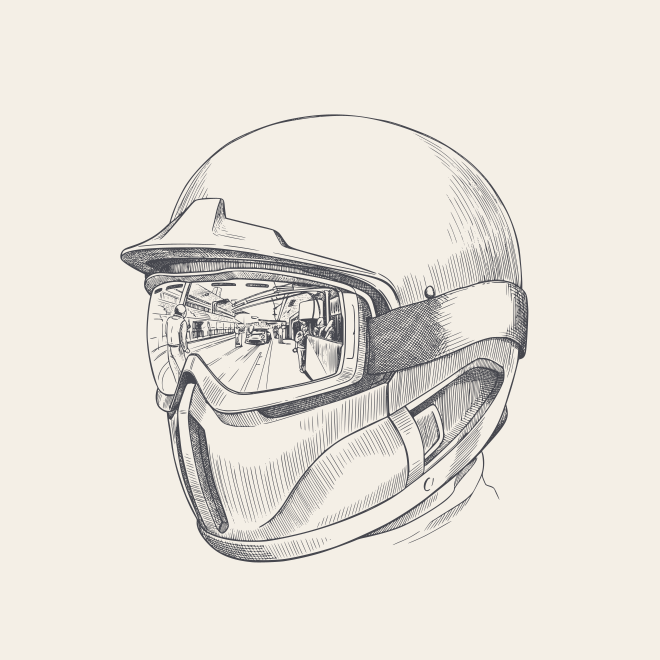
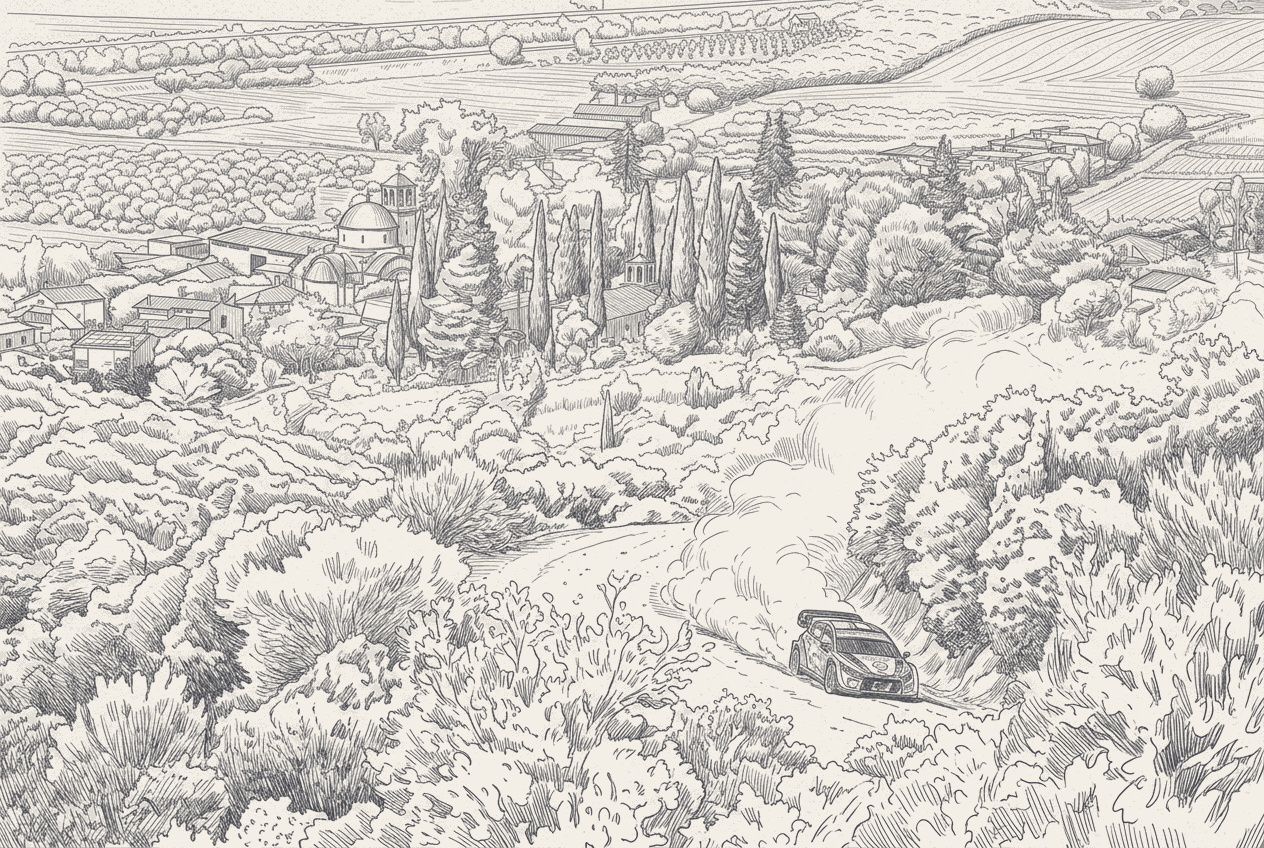
The Acropolis Rally returns to Loutraki for its 70th running, on the roughest gravel the championship visits.
The 2026 Acropolis Rally runs 17 special stages and 323 kilometres of competitive gravel across four days from June 25, the 70th running of the event WRC crews call the Rally of Gods. It is the eighth round of the season and, by long reputation, the one the cars are least likely to survive intact.
Heat and jagged, rock-lined gravel through the mountains north of Athens make the Acropolis one of the championship's most demanding rounds, and the surface does not stay still as the rally runs. Tracks break up under the field, exposing buried rocks that destroy suspension and shred tyres, while cockpit temperatures climb into a range that punishes crews as hard as cars. Finishing here has always meant more than a classification. It is a reliability certificate, issued by one of the roughest surfaces the calendar offers.
Dropped from the schedule for years, the Acropolis returned to the championship in 2021, one of rallying's oldest and most storied rounds. Its identity, dust, rock and heat, predates the hybrid Rally1 machinery now sent to face it, and the cars have changed beyond recognition since the event's heyday while the test it sets has not.
Loutraki is the new base, and it is partly an old one. The Corinthian town on the gulf, an hour from Athens, hosted the Acropolis between 2009 and 2013 before the rally moved its service park elsewhere, and the 2026 route runs out from there across both central Greece and the Peloponnese. Crews tackle the Parnassos and Thiva stages to the north and the Menalo and Kefalari roads to the south, with long competitive days framed by single service windows, before the Power Stage closes the event back at Loutraki on June 28.
Twelve Rally1 cars head a 58-strong entry: five Toyotas, three Hyundais and four M-Sport Fords. Toyota brings Elfyn Evans, Sebastien Ogier, Takamoto Katsuta, Oliver Solberg and Sami Pajari; Hyundai answers with Thierry Neuville, Adrien Fourmaux and Daniel Sordo; M-Sport fields Josh McErlean, Jon Armstrong, Martins Sesks and Jourdan Serderidis in Ford Pumas. Behind them sits one of the season's deepest WRC2 entries, the privateer rung the Acropolis has always drawn for its prestige. Evans arrives leading the standings on 151 points after winning Rally Japan to head a Toyota home sweep, 20 clear of Katsuta, with a title fight now run on a surface that settles as many rallies by attrition as by pace.
Why the durability is the road story
The Acropolis is where rallying's road relevance stops being a slogan. A car that survives 323 kilometres of rock without a broken damper, a cracked sump or a cooked cooling system has proved the kind of robustness that road engineers borrow, and the work that earns it, on suspension travel, on impact resistance, on heat rejection, is the same work that goes into the road cars these machines are named for. The GR Yaris and the i20 N share their names with the cars on these stages, and Greece is the week the abuse runs hardest. Sump guards, wheel bearings, driveshaft joints and brake cooling all get validated here in a way a smooth asphalt round never asks, and the lessons feed back into the parts a buyer never thinks about until one fails.
Tyres make the link explicit. A revised gravel construction is set for its WRC debut in Greece, built for the hard-compound durability that rough rounds like the Acropolis, Sardinia and Portugal demand, the same priority, longevity over a single fast lap, that governs a road tyre's design brief. The rally doubles as a development lab with a finish line, and the harder the surface, the more the lab teaches the engineers reading the data back at the factory.
What is at stake
Attrition settles this rally as often as pace does. The Acropolis has a long habit of rearranging the leaderboard, and a championship leader holding a 20-point cushion has as much to lose to a single buried rock as to a faster rival across four days. Tyre choice becomes strategy rather than detail, and the temptation to push on stages that reward caution is where leads are surrendered.
Last year's winners, Ott Tanak and Martin Jarveoja, are not on the entry after Tanak stepped away from the championship, so the rally that tends to reward survival opens without its defending pace at the front. Hyundai, the reigning manufacturer winner here, arrives needing a result on a surface that has historically suited it, against a Toyota that locks out the championship's top five.
The 70th Acropolis starts from Loutraki on June 25 and closes there with the Power Stage on June 28. The cars that are still whole on Sunday will have passed the test the smoother rounds never set.